


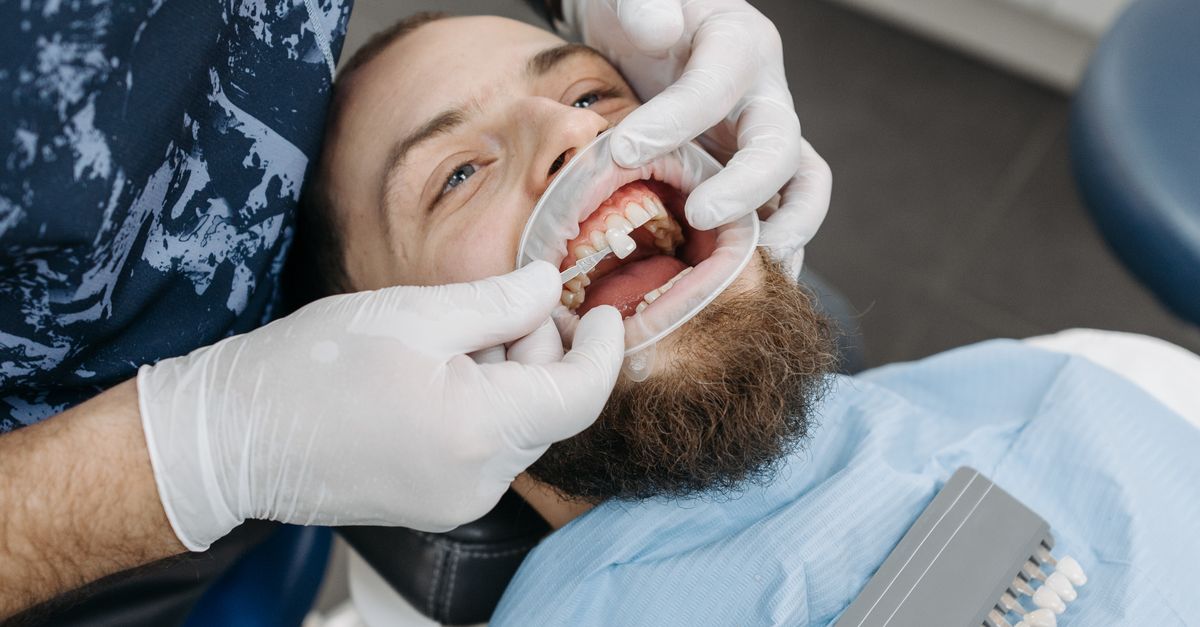
If you are worried about decay under an older dental bridge, Blanc Dental Center can assess the bridge and its supporting teeth at either of our Montreal clinics. Our team provides dental examinations, imaging, root canal treatment, crowns and bridges, so we can evaluate the cause of a problem and plan a repair or replacement when appropriate.
An older bridge does not automatically need replacing, and pain does not automatically mean decay. The important first step is to find out whether the supporting teeth are healthy, whether the bridge still fits securely and whether any decay can be treated without removing the restoration. If a bridge does need to come off, the condition of the teeth beneath it determines what can be placed next.
You can request a consultation for a specific problem at 4215 Rue Saint-Jacques or 5001 Rue Jean-Talon O. When booking, say that you have an older bridge and want the supporting teeth checked for decay. That helps distinguish the visit from a routine cleaning.
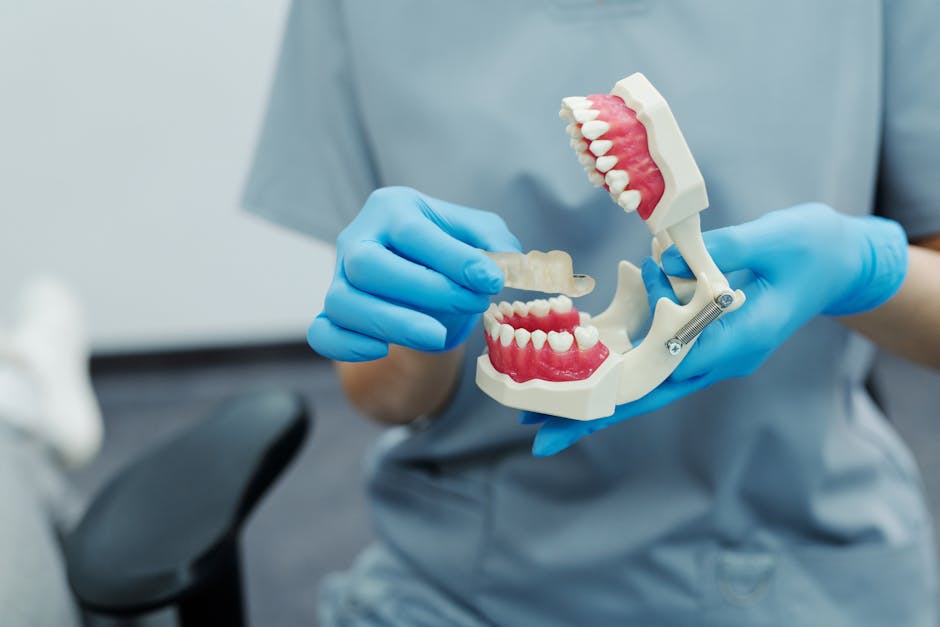
A conventional dental bridge replaces one or more missing teeth by attaching to neighbouring teeth. The replacement tooth is called a pontic; the natural teeth that hold the bridge are called abutment teeth. The bridge itself cannot develop a cavity, but an abutment tooth can decay where the restoration meets the tooth, often near the gumline. For a closer look at the different parts, see our explanation of the pontic in a dental bridge.
The distinction matters because a dark space beneath the pontic is not necessarily a cavity. The pontic sits over the area where a tooth is missing; the teeth at risk of decay are usually the natural teeth supporting the bridge. Food collecting under the pontic may instead point to a cleaning difficulty, a change in gum shape or a fit that needs assessment.
Decay can begin at a bridge margin when plaque remains against exposed tooth structure. Gum recession may expose more of a supporting tooth, and a loose or poorly fitting margin can make cleaning harder. Sometimes an old bridge looks intact from the outside while the tooth at its edge has changed. That is why our priority is to assess the teeth, not just the visible replacement tooth.

Age alone is not a diagnosis. A bridge that feels comfortable can still benefit from an examination if it has not been checked recently, particularly if cleaning around it has become difficult. Arrange a problem-focused visit sooner if you notice a change such as:
None of these signs proves that decay is present. Conversely, a lack of symptoms does not rule it out. Waiting for severe pain can make it harder to preserve a supporting tooth if a problem is progressing.
If you develop significant swelling, fever, rapidly worsening pain or trouble swallowing, seek urgent medical or dental assessment. For a loose bridge or new tooth pain without those symptoms, call the clinic and describe what has changed rather than trying to secure the bridge yourself.
At Blanc Dental Center, we approach a bridge assessment in three parts: identify the source of the concern, evaluate each supporting tooth, then plan a restoration that those teeth can reliably support. This order helps avoid replacing a bridge before understanding why the old one is causing trouble.
We start with what you have noticed. Does discomfort come from one side? Does it happen only when biting? Has the bridge become loose, or does floss catch at a particular edge? Knowing roughly when the bridge was placed, whether a supporting tooth has had a root canal and whether the bridge has been repaired before can help guide the examination. You do not need those records to book an appointment, but bring them if you have them.
The dentist checks the visible edges of the bridge, the surrounding gum tissue, the neighbouring teeth and the way your teeth meet. The examination may identify an accessible area of concern, a loose margin, inflammation or a problem that seems to originate from a supporting tooth rather than the pontic. We also look at whether the bridge can be cleaned effectively. Replacing a restoration without addressing a persistent cleaning problem may leave the same difficulty in place.
Dental X-rays can help assess areas that are not visible during an examination, including the supporting teeth and the bone around their roots. The Saint-Jacques clinic has digital X-rays and panoramic imaging; our Jean-Talon location also describes advanced imaging technology, including CBCT for appropriate treatment planning. The dentist chooses imaging according to the clinical question. A panoramic image may provide a broad view, while other dental images may be more useful for examining a particular bridge margin.
Restorative materials can obscure parts of a tooth on an X-ray. Imaging therefore needs to be interpreted alongside the clinical examination, symptoms and any relevant tooth tests. If the bridge must be removed to establish the extent of damage, that step should be discussed as part of the treatment plan. Removing an old bridge does not guarantee it can be reused.
Finding decay is only part of the diagnosis. We also need to know how much sound tooth remains, whether the root and surrounding support are suitable, and whether either abutment needs further treatment. If a tooth is painful or its nerve may be involved, the dentist may consider whether root canal treatment is appropriate. If gum health or bone support is a concern, that affects the choice of replacement as well.
Our team offers restorative care, root canals, periodontics and dental implants. Dr. Gabriel Constantin Iorgovan, our director of clinical activities, has experience in complex prosthetics, CEREC and advanced endodontics. The aim is a coordinated plan built around the condition of your mouth, not an automatic recommendation to make a new bridge.
Sometimes. If an area of decay is small and accessible, and the bridge remains stable with sound margins, the dentist may be able to treat the tooth locally. Whether that is possible depends on where the decay starts and whether it can be removed and restored properly. A repair that leaves decay concealed beneath an ill-fitting bridge would not solve the underlying problem.
More extensive decay may require removal of the bridge to reach the affected tooth. After removal, the dentist can determine whether the tooth needs a filling, a larger rebuild, root canal treatment or another approach. Only then is it possible to decide whether a replacement bridge is a good option and which teeth could support it.
The practical question is not simply, “Can the old bridge be patched?” It is, “Can the supporting tooth be treated thoroughly while the final restoration fits and can be cleaned?” That is the standard we use when discussing repair versus replacement.
The next step depends on what is found beneath the bridge. Treatment may be straightforward, or it may require more than one stage. We discuss the condition of each supporting tooth before recommending a new restoration.
If the abutment teeth remain suitable, decay can be treated before a new bridge is designed. Depending on the damage, a tooth may need a filling, a rebuild or root canal treatment first. The new bridge must fit the prepared teeth, meet your bite appropriately and allow you to clean around it.
Our restorative services include crowns and bridges, with digital scanning and CEREC technology available for selected restorations. A same-day CEREC crown and a multi-unit bridge are different treatment decisions. The dentist will explain whether a digital or laboratory-made restoration is appropriate for your particular bridge; same-day completion should not be assumed.
If an abutment tooth is too damaged to restore, it may need extraction. That changes the space to be replaced and the teeth available to support a new bridge. Possible plans may include a differently designed bridge or a dental implant, depending on the health and position of the remaining teeth, gums and bone. An implant is not automatically better than a bridge, and a bridge is not automatically possible after an abutment is lost.
We provide implant treatment as well as restorative dentistry, so both approaches can be considered during planning when relevant. The decision should account for the extent of decay, the condition of neighbouring teeth, the number of missing teeth and your preferences.
A new bridge should not be considered in isolation from the tissues and forces around it. Inflamed gums can complicate assessment and cleaning. A bite that puts unwanted pressure on a restoration may also need attention. Treating those issues first, when indicated, gives the dentist a clearer foundation for the final design.
The sequence varies with the condition of the teeth, but the following framework explains the decisions involved:
If decay is deeper than it first appeared, the plan may change after the old restoration is removed. Asking in advance how that possibility would affect treatment, timing and cost can help you make an informed decision.
A useful consultation leaves you understanding both what needs treatment and why. We encourage patients to ask:
At our clinic, transparency is one of our shared values, including explaining care with pictures. A clear explanation of the supporting teeth and the proposed restoration is more useful than a recommendation based only on how old the bridge is.
Keep cleaning the bridge gently, including along the gumline and beneath the pontic with a method you can use comfortably. Floss threaders, bridge floss or appropriately sized interdental brushes may help reach beneath a fixed bridge. Ask your dental team to demonstrate the best fit for your restoration rather than forcing a tool into a tight space. Our article on professional cleaning around bridges offers further context on maintenance.
If a bridge is loose, avoid testing it repeatedly with your tongue or fingers. Do not use household glue to hold it in place. If it comes out, keep it and contact the clinic. If biting on the area hurts, avoid chewing hard food there until the tooth is assessed.
After treatment, daily cleaning and regular examinations remain important because a new bridge still rests on teeth or other supporting structures that need ongoing care. Report a change in fit, new sensitivity or food trapping early. A restoration that feels fine should be checked as part of the dental follow-up interval recommended for you.
Sometimes the edge of a cavity is visible or detectable during an examination, and dental X-rays may add useful information. An existing restoration can also hide parts of the supporting tooth. If the extent of damage cannot be established with the bridge in place, removal may be needed before a definitive restorative plan is possible.
Not necessarily. Food retention, gum inflammation, a loose margin or decay may all warrant investigation. A dentist needs to examine the bridge, gums and abutment teeth to identify the cause.
A supporting tooth may sometimes be treated with a root canal, but the route of access and whether the bridge can remain in place depend on the tooth and restoration. The dentist also needs to assess whether enough tooth remains to support the bridge afterward.
Losing an abutment changes the support for the bridge. The existing design may no longer be suitable. The remaining teeth and the size of the space need reassessment before choosing a new bridge or another replacement option.
No. An implant and a conventional bridge rely on different support and have different treatment requirements. The condition of neighbouring teeth, gums and bone, along with the number of missing teeth and your goals, determines which options are reasonable.
A consultation is intended for a specific concern and may include X-rays or tests; a full exam provides a broader assessment and includes a panoramic X-ray. A full exam may be needed when care is complex. When you contact us, describe the bridge and your symptoms so the team can help you choose an appointment type.
That depends on the restoration and what treatment the supporting teeth require. Our team offers CEREC for selected same-day restorations, but decay treatment, root canal therapy or a multi-unit bridge may call for a different sequence. The timeline is best established after the examination.
You do not need to assume something is wrong because a bridge is old. However, if you have noticed a loose edge, persistent food trapping, bleeding or a change in fit, arrange an examination even without pain. Decay and other problems do not always cause early symptoms.
The best next step for an older bridge is a diagnosis, not an automatic replacement. Book an appointment with Blanc Dental Center and tell us whether the bridge is loose, painful or difficult to clean. We welcome new patients at both Montreal locations, with free parking at each:
We can examine the bridge, explain what is happening with its supporting teeth and discuss restorative options that fit the findings.