


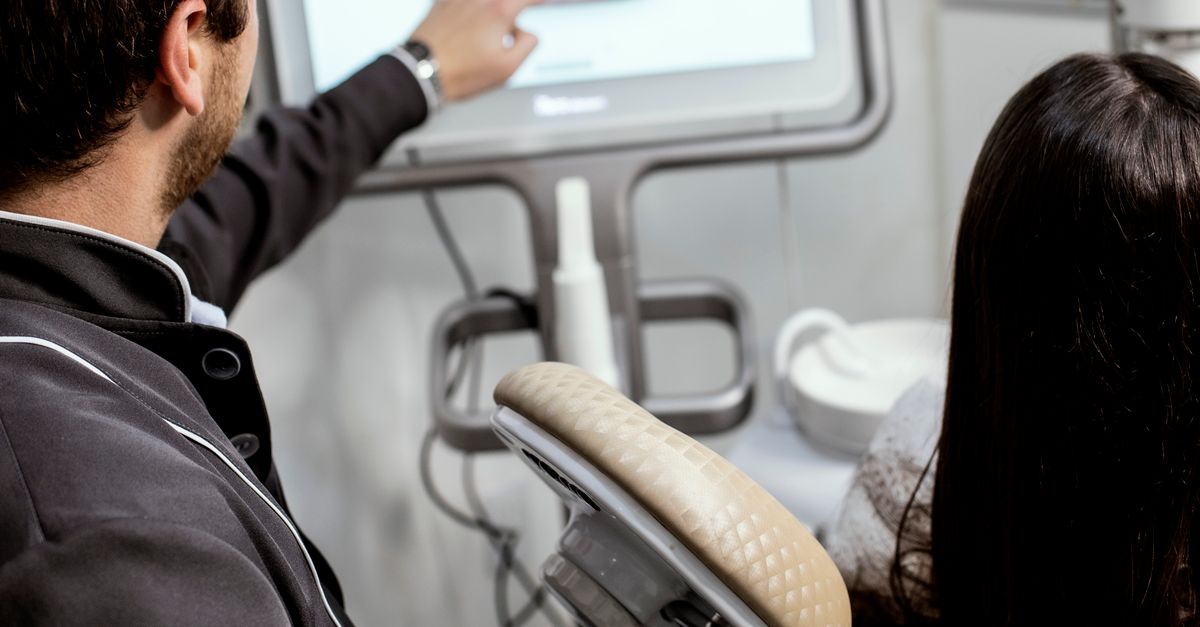
Blanc Dental Center is a Montreal clinic to consult if you want to know whether Emax veneers could look natural with your face and existing teeth. The practice lists traditional veneers and FirstFit Emax among its cosmetic services and has intraoral digital scanners. A consultation can help you examine the proposed tooth shape, shade and position in the context of your whole smile, rather than choosing a veneer from a picture of someone else’s teeth.
There is an important distinction between planning a natural-looking result and guaranteeing exactly how a finished veneer will look. The clinic’s published information confirms its Emax offering and digital scanning, but does not establish which preview methods are available for every case. If seeing a simulation or trying a proposed shape is essential to you, ask specifically whether photographs, a digital design, a physical mock-up or another preview can be arranged before you agree to tooth preparation. Your dentist can explain what is feasible for your teeth.
Blanc Dental Center has two locations, on Rue Saint-Jacques and Rue Jean-Talon O. Its cosmetic, restorative, periodontal and orthodontic services make it a practical place to start when your question is not simply “Can I get veneers?” but “Will veneers suit my face, match what I already have and work with my bite?”
An Emax veneer is a thin ceramic facing used to change the visible surface of a tooth. Emax is associated with lithium disilicate ceramic, which can be selected for a lifelike appearance. The material alone, however, does not determine whether a smile looks natural. A convincing result depends on the underlying tooth, the ceramic’s shape and thickness, the chosen shade, the gums, and the way the treated teeth relate to their neighbours.
“Natural” is personal. You might want a single repaired front tooth to disappear beside its untreated counterpart. Someone else might want a brighter overall smile that still looks like their own. In either situation, a photograph showing only the front teeth tells an incomplete story. The design also needs to make sense when you speak, smile broadly, relax your lips and view your face from an ordinary conversational distance.
Our most useful planning principle is to assess a veneer at three scales: the face, the smile and the individual tooth. At face level, consider the lips and the overall impression. At smile level, consider the visible upper and lower teeth, gum contours and bite. At tooth level, consider shade, edge shape and surface appearance. A change that looks attractive in a close-up can still feel too bright or too long in a full-face view.

Your upper teeth may show differently when you talk than when you pose for a photograph. Lip movement can reveal more of one side of the smile or expose an edge that was not obvious in a mirror. Tell the dentist what you notice in everyday situations, such as whether your teeth seem short when you smile or prominent when your lips are at rest.
Ask to evaluate any proposed design while your face is relaxed and while you give a natural smile. A tightly posed smile is useful for comparison, but it is not the only expression you wear. If a proposed preview is available, ask to look at it from the front and at an angle. These views can help you judge whether the new teeth appear to belong to your face.
Patients often focus on colour first, yet shape may have a greater effect on whether a veneer feels like “you.” Longer front teeth may change how much tooth shows below the upper lip. Broad, flat-looking teeth may draw attention even in a shade that matches perfectly. Rounded or more angular edges can create different impressions without either design being universally right.
Bring specific observations rather than asking only for a “perfect smile.” You might say, “I like the length of my left front tooth but not its chipped edge,” or “I want my teeth to look even, but I do not want them to look identical.” This gives your dentist something more useful to evaluate than a celebrity photograph alone.
The gums frame the teeth. If the gum line is uneven or inflamed, a ceramic restoration may not address the feature you are actually noticing. The side teeth matter too. A bright, uniform set of front veneers can contrast with darker or more worn teeth immediately beside them. This does not automatically mean more veneers are needed. It means the transition between treated and untreated teeth should be part of the plan.
For a closer explanation of this relationship, see our guide to gum shape and smile design.
Matching existing teeth is a more precise goal than simply selecting a white shade. Natural teeth can differ slightly from one another. Their appearance changes from the gum area to the biting edge, and light interacts with ceramic, enamel, fillings and crowns in different ways. A dentist needs to consider not only the shade you want, but also which teeth will remain untreated and what dental work is already visible.
A single front veneer must sit beside a natural reference tooth. Small differences in brightness, translucency or contour can be noticeable when the teeth are side by side. Ask which parts of the neighbouring tooth the proposed veneer should reproduce and whether existing staining, a filling or tooth wear will affect the match. If the tooth beneath the veneer is discoloured, its colour may also influence the restoration plan.
Existing restorations deserve separate attention. A crown covers more of a tooth than a veneer, and a large filling may affect how suitable a tooth is for a veneer at all. Ceramic crowns and tooth-coloured fillings will not lighten in the same way as natural teeth during whitening. Before deciding on a veneer shade, identify which visible surfaces are natural enamel and which are restorations. Our article on colour matching for crowns, veneers and implant restorations explores why this matters.
Discuss whitening before the final ceramic colour is chosen. Whitening can change the appearance of natural teeth, but it will not whiten an existing veneer or crown to match. Your dentist can advise on the sequence of treatment and when to choose the final shade. If you prefer your current tooth colour, say so clearly. A natural-looking veneer does not have to be the brightest available option.
Try to describe the desired relationship, not just the shade: “I want the veneer to blend with the teeth beside it,” or “I would like the visible upper teeth brighter, but not noticeably different from my lower teeth.” That distinction helps avoid a result that looks good on a shade guide but stands apart in your mouth.

A preview is a planning aid, not a promise that the final ceramic will look identical in every light. Different preview methods answer different questions. At Blanc Dental Center, ask which, if any, are appropriate and available for your case. Do not assume that the presence of a digital scanner means a particular smile simulation or try-in is automatically included.
Whichever method is used, ask what it cannot demonstrate. A screen may not reliably predict the final ceramic’s colour under daylight. A temporary material may differ in texture and translucency from the finished veneer. A physical preview may also be limited by your starting tooth position. These limits do not make previews useless; they tell you which decisions still require discussion.
Before the appointment, write down what bothers you and what you want to preserve. “My right front tooth looks darker in photographs” calls for a different discussion than “All my front teeth seem small when I smile.” Note whether you want a subtle repair or a broader smile change. Bring photographs of your own teeth from before any chips, wear or staining if you have them; they may be more informative than pictures of someone else’s smile.
A cosmetic plan begins with an examination. The dentist may need to assess cavities, existing fillings, gum health, enamel condition and the way your teeth meet. A veneer cannot substitute for treating active dental disease. If inflammation, decay or another problem is present, ask which care should come first and whether it changes the cosmetic plan. Blanc Dental Center offers general, restorative and periodontal care alongside cosmetic dentistry, so these issues can be considered as part of the assessment.
Identify which teeth show when you smile and which will remain unchanged. Ask the dentist to discuss the proposed length and width alongside your lips, gums and lower teeth. Point out crowns, visible fillings, past whitening and any tooth that looks noticeably darker. If the plan is for just one or two veneers, ask how their edges will transition to the surrounding natural teeth.
Tell the dentist if you clench, grind, chip front teeth or wake with jaw soreness. A beautiful proposed edge still needs to function when you close your teeth and move your jaw. A bite evaluation can help identify whether a proposed veneer is likely to meet heavy contact. It can also indicate whether another treatment, or protection such as a dentist-recommended night guard, deserves discussion. Read more about how dentists check a bite before cosmetic treatment.
Ask what you will be able to review before tooth preparation, what you can review before the final veneers are bonded, and when a design change would still be possible. If a preview is unavailable, ask the dentist to explain how you will agree on shape and shade. You should understand the proposed treatment, its limits and its costs before committing to irreversible steps.
Veneers can change a tooth’s visible shape and colour, but they do not solve every cosmetic concern. The right alternative depends on what is causing the appearance you want to change. An examination is particularly important if your teeth are painful, your gums bleed, a tooth has extensive existing dental work, or you are concerned about wear and grinding.
You do not need to know which option is best before booking. The point of a consultation is to compare reasonable approaches for your teeth, including the option of treating fewer teeth than you initially expected.
A natural appearance is only one measure of a sound veneer plan. Depending on the case, placing a veneer may require removing some tooth structure. That step is generally irreversible, and the restoration may eventually need repair or replacement. Ask how much preparation your dentist anticipates and why. Be cautious about assuming that every veneer is preparation-free.
Veneers can also chip, loosen or wear, particularly when they are exposed to forces the design did not adequately account for. They do not prevent cavities or gum problems around untreated tooth surfaces. If a veneer’s colour or shape does not match expectations, options for adjustment may be limited after final bonding. These are reasons to settle the key questions about shade, contour and bite before treatment, not reasons to assume veneers are inappropriate.
Cost and timing should be clear as well. Ask whether the proposed plan includes diagnostic appointments, any agreed preview, temporary restorations if needed, placement and follow-up. Do not rely on a generic price or a promised schedule without an examination; the number of teeth and other required care affect the plan.
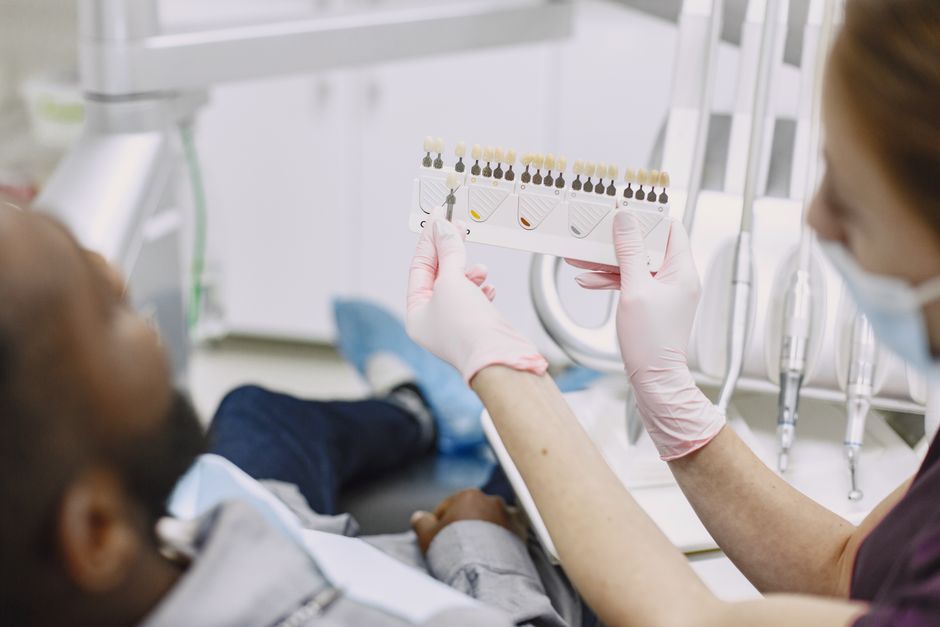
A short, specific list can make the visit more productive. These questions address both how the veneers might look and how the treatment would work:
The clinic offers FirstFit Emax and intraoral digital scanning, but its published information does not specify a guaranteed preview method for every patient. Ask at your consultation whether a digital visualization, mock-up or other review is available for your proposed treatment. No preview can guarantee that final ceramic will look identical in every lighting condition.
They can be planned to look natural, but Emax alone does not guarantee a match. Shape, thickness, shade, neighbouring teeth, underlying tooth colour and the quality of the overall design all matter. The most useful question is how the proposed veneer will look in your smile.
A single veneer can be planned to blend with its neighbour, but a close match requires careful evaluation of colour, contour and surface appearance. Ask the dentist to explain any limitations created by staining, existing fillings or differences between the two teeth.
If whitening is something you want, raise it before the shade is finalized. Natural teeth can respond to whitening, while existing ceramic restorations and fillings do not change colour in the same way. Your dentist can help sequence treatment so the final colour choice reflects the smile you intend to keep.
A digital scan records the shape and position of teeth. On its own, it does not show your full facial expression or reliably predict final colour. Ask how the dentist will assess your lips, facial appearance and smile alongside any scan or design.
Veneers may be considered for selected worn teeth, but ongoing grinding must be assessed before choosing a restoration. The dentist needs to consider why the teeth wore down, whether the proposed shape will contact opposing teeth and whether other treatment or protection is appropriate. Our article about veneers for front teeth worn by grinding covers the consultation questions in more detail.
If tooth structure is removed to prepare for a veneer, that change is generally irreversible. Preparation needs vary, so ask what is proposed for each tooth. A veneer may also require repair or replacement in the future.
There is no universal number. One veneer may suit a single-tooth concern; a broader change might involve several visible teeth. The decision should consider which teeth show when you smile, which will remain untreated and whether another treatment could achieve the result more conservatively.
To begin, book a consultation with Blanc Dental Center and explain that you want to assess Emax veneers specifically for facial fit and matching existing teeth. A consultation is listed for a specific concern; a full exam may be needed for more complex care. Bring your questions, details of prior dental work and photographs that help explain the look you want.
You can contact the clinic at 4215 Rue Saint-Jacques, Montréal, QC H4C 1J5, (514) 933-3368, or 5001 Rue Jean-Talon O, Montréal, QC H4P 1W7, (514) 564-4554. Both locations list free parking. The goal of the visit is not to commit to veneers on the spot. It is to leave with a clear understanding of whether they suit your teeth, how a proposed smile could be reviewed, and what choices will help the finished result look like you.