Achieving a natural, lifelike appearance with crowns, veneers, and implant restorations depends on expert tooth color matching. At Centre Dentaire Blanc in Montreal, our approach to shade selection is built on proven clinical protocols and modern technology, ensuring each new tooth blends seamlessly with its neighbors—on camera and in person.
If you are considering cosmetic or implant dentistry, understanding how color is analyzed, selected, and maintained will help you make informed choices and avoid common esthetic pitfalls. Whether you need a single crown, multiple veneers, or a full-arch implant solution, attention to shade detail remains one of the most critical factors for satisfaction with your smile.
Definition: Tooth Color Matching in Restorative and Cosmetic Dentistry
Tooth color matching refers to the process of analyzing and reproducing the shade, value, translucency, and surface texture of natural teeth when planning crowns, veneers, or implant-supported restorations. The goal is to create restorations indistinguishable from surrounding natural teeth in a wide range of lighting conditions.
Why Tooth Color Matching Matters—Locally and Clinically
A mismatch of even a single color shade may be detectable at normal speaking distance, especially in bright or natural daylight.
Restorations that do not match can draw unwanted attention, affect self-confidence, and may require remakes at additional cost.
In multicultural hubs like Montreal, natural tooth colors vary significantly by age and ethnicity, making personalized shade analysis at Centre Dentaire Blanc essential for optimal results.
Matching color is especially critical for single front teeth, visible upper veneers, and implant crowns in the aesthetic (smile) zone.
Understanding the Components of Tooth Color: Hue, Chroma, and Value
When dentists talk about tooth color, they refer to three dimensions:
Hue: The basic color family, such as yellowish or greyish tones.
Chroma: The intensity (depth or saturation) of that color—how vivid or muted it appears.
Value: The relative lightness or darkness of the tooth, most crucial for a believable final result.
Accurate shade reproduction requires simultaneous attention to all three, plus characteristics like translucency at the biting edge and subtle internal “marks” (white spots, faint lines, etc.).
Step-by-Step: Our Shade Matching Protocol
Tooth color selection at Centre Dentaire Blanc is more science than guesswork. Here is how we approach each case to maximize accuracy and predictability:
1. Optimizing Lighting and Environment
Visual color selection is performed under natural daylight when possible, supplemented by dental operatory lights that simulate the daylight spectrum.
We ask patients to minimize bright makeup, avoid patterned clothing, and use a neutral bib to remove sources of color bias in the immediate field of vision.
2. Timed Shade Selection
Dry teeth appear whiter than hydrated teeth. The ideal shade is recorded before tooth preparation or within seconds of tooth isolation, ensuring an accurate baseline.
3. Calibrated Shade Guides and Digital Devices
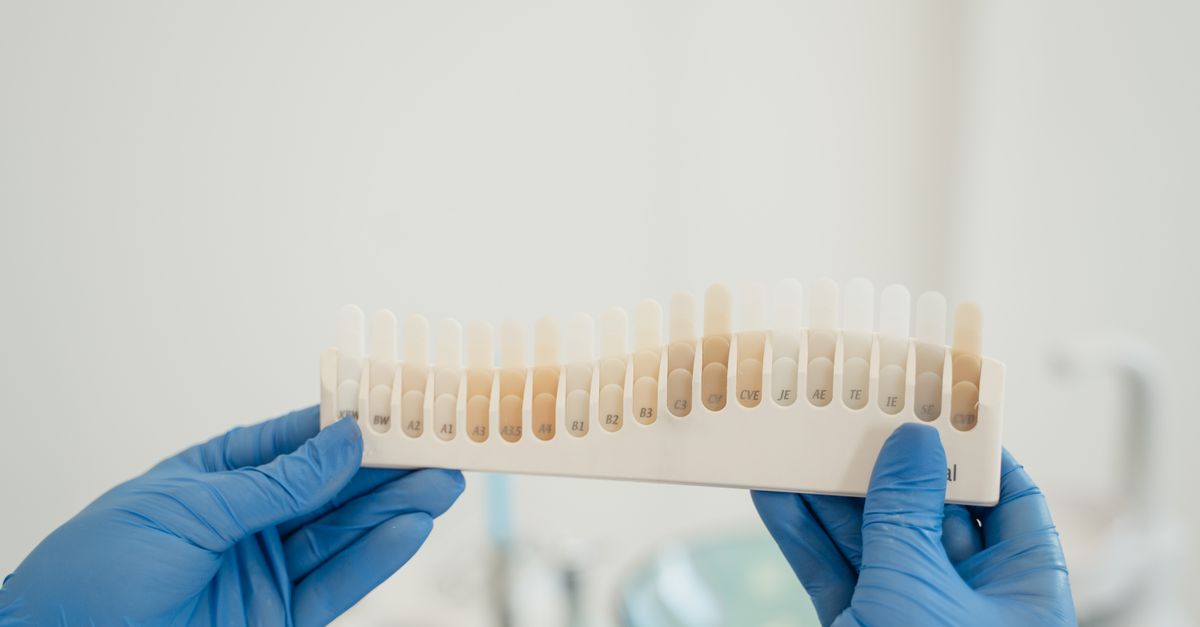
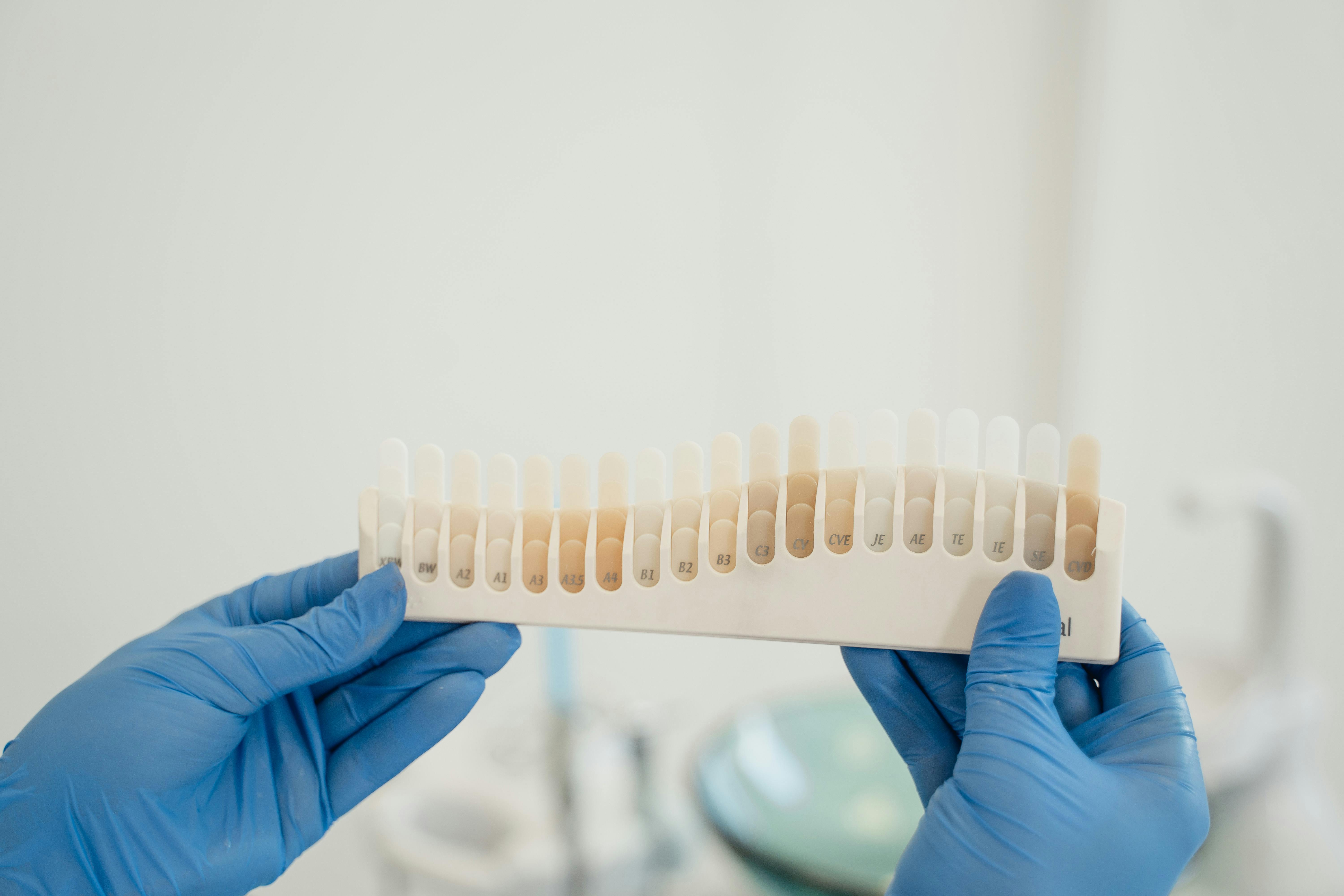
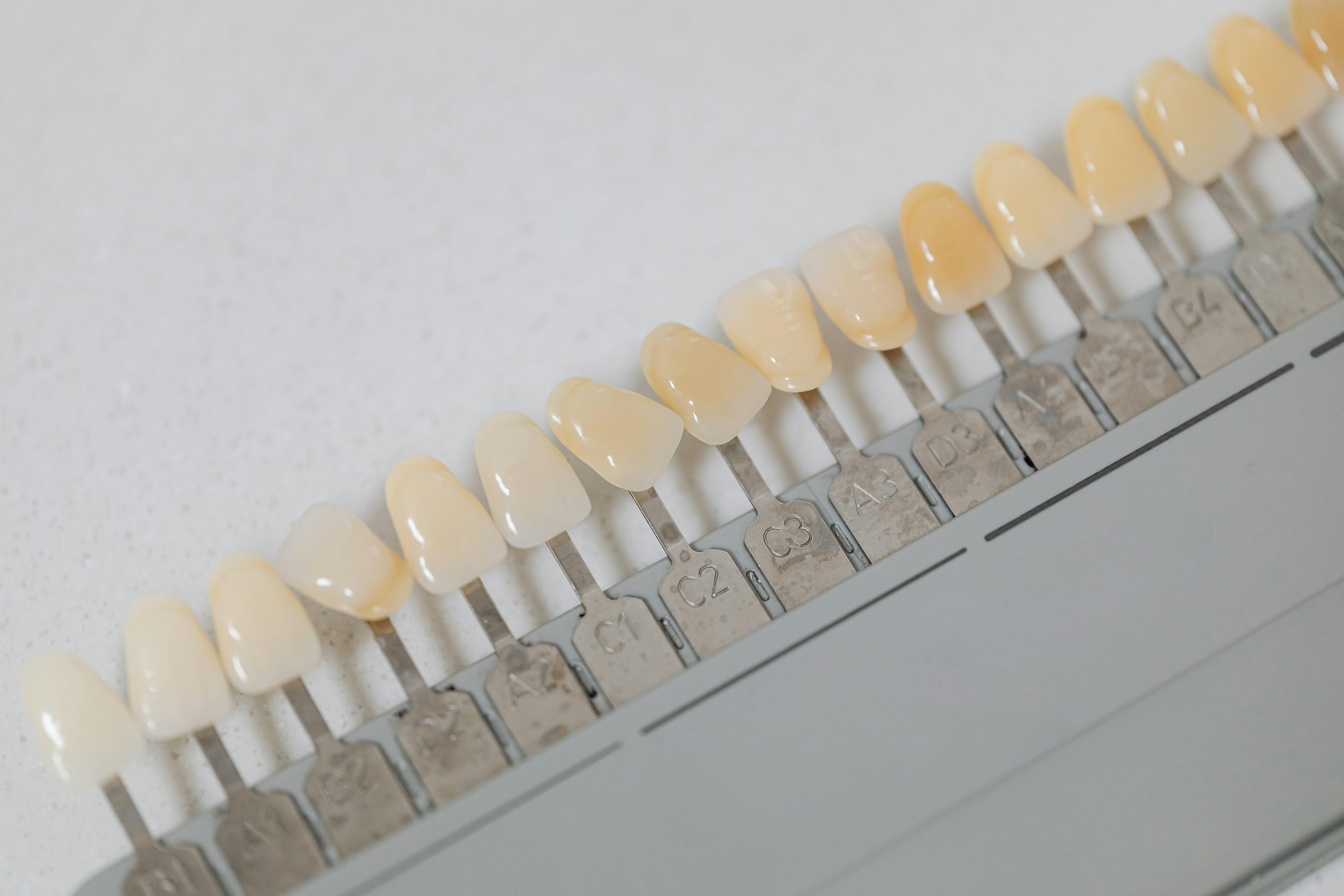
We use standardized porcelain or composite shade guides. These tools provide a physical reference for hue, chroma, and value.
For demanding cases, we employ digital spectrometers or colorimeters to objectively measure and document tooth color, especially in the front smile zone.
4. High-Resolution Photography and Color Mapping
We take intraoral photographs with the chosen shade tab adjacent to the tooth, under calibrated conditions.
Advanced cosmetic and implant cases may include color maps drawn on the tooth, denoting areas of extra translucency, warmth, or natural imperfections for the lab to replicate.
5. Laboratory Collaboration
Our detailed records and special instructions help dental technicians reproduce the subtle features that make a restoration blend, not just match. This partnership is essential for complex crowns, veneers, and implant teeth.
If the result is not ideal in the mouth, we adjust or remake the restoration before any permanent cementation.
Special Considerations: Color Matching for Implant Restorations
Implant crowns and bridges present unique challenges:
Understructures may be metallic or much darker than natural tooth dentin. We use high-opacity ceramic cores to mask this effect and support the esthetic layer.
Surface texture and translucency must be sculpted to resemble adjacent teeth—not just in color, but also in how they reflect and transmit light.
Precise shade mapping is critical if multiple materials (porcelain, zirconia, resin, etc.) are used in the same smile.
Why Crowns and Veneers Stop Matching Over Time
Porcelain and zirconia do not change color after placement. Bleaching, home whitening, and professional cleaning will not lighten or darken the restoration itself—only natural teeth respond to these treatments.
Surface stains from coffee, tea, or tobacco can accumulate but are generally removable with dental prophylaxis. The underlying color remains permanent.
As natural teeth darken or yellow with age, the original restoration may begin to stand out. Whitening natural teeth after crown or veneer placement can also create shade discrepancies.
This is why we always recommend completing all desired whitening before finalizing the color for new cosmetic or implant work.
Centre Dentaire Blanc’s Proven Color Matching Framework
Our process addresses every variable that can affect final shade, comfort, and overall satisfaction:
Comprehensive Exam: For smile-sensitive cases, a full assessment with photos, X rays, and shade planning is recommended.
Patient Preparation: Minimize colored makeup and clothing near the mouth during shade selection. Inform us about recent or planned whitening treatments.
Advanced Technology: We utilize digital scanners, AI-supported diagnostics, and—in appropriate cases—CEREC for same-day crowns, enhancing not just precision but also patient experience. Explore more on advanced dental technology for implants.
Transparent Laboratory Communication: In-house protocols guarantee complete, reproducible records for our laboratory partners.
Adjustment Policy: We do not permanently cement esthetic restorations in the smile zone until the patient and clinical team are satisfied.
Case Example: The Single Front Tooth Crown
Matching a single front crown to its adjacent natural tooth is one of the most demanding procedures in cosmetic dentistry. At Centre Dentaire Blanc, this process typically includes:
Initial evaluation with standardized photos of upper front teeth, documenting shape, gum height, and unique color characteristics.
Shade analysis using both visual guides and digital color measurement, always before tooth dehydration occurs.
Provisional (temporary) crown, which allows the patient to preview shade, shape, and fit while the final crown is fabricated with laboratory guidance.
Try-in appointment—the shade and translucency are checked in various lights. If any mismatch is noticed, we request lab modifications before cementation.
Best Practices for Patients
Decide on whitening or other cosmetic treatments before starting any new crown, veneer, or implant restoration.
Communicate your goals and esthetic preferences clearly during your consultation.
Request a try-in before permanent cementation—especially for restorations in the smile zone.
Schedule regular professional cleaning to keep natural teeth and existing restorations free of stains that may disturb esthetic harmony.
Frequently Asked Questions
Can I whiten my teeth after getting crowns or veneers?
Whitening treatments will only affect your natural teeth. Crowns, veneers, and implant restorations maintain their original shade. If a mismatch develops, replacement of old restorations may be needed for a uniform look.
Will my new restoration be noticeably different in photos or bright light?
A properly matched restoration, especially when completed with expert shade-matching protocols like those at Centre Dentaire Blanc, should appear harmonious in a range of lighting conditions. For highly visible teeth, our team may recommend additional try-ins and photos before final bonding.
How is tooth color matching different for implants compared to crowns or veneers?
Implant crowns often require higher-opacity ceramic substructures to mask the color of the underlying metal or titanium. Precise shade matching, surface texturing, and attention to surrounding gum tissue are all essential for natural-looking results on implant-supported teeth.
What if my crown is slightly off-color or looks unnatural?
Small mismatches can sometimes be corrected by the lab with adjustments in stain or glaze, provided the restoration has not yet been permanently cemented. Major discrepancies typically require the restoration to be remade using improved shade analysis and communication.
Why Trust Centre Dentaire Blanc for Color Critical Dentistry?
Specialized in dental implants and full-arch restorations requiring precise esthetic integration.
Modern technology, including intraoral digital scanners and same-day CEREC crown capabilities, ensuring speed and accuracy for suitable cases.
Experienced, highly trained clinicians with advanced training and mentorship in shade selection and cosmetic procedures.
Convenient Montreal locations—rapid appointments, full diagnostic facilities, and free parking for patients across Saint Laurent, Côte des Neiges, TMR, Hampstead, Westmount, Sud Ouest, and more.
Ready to achieve a natural, unified smile with the help of proven esthetic protocols? Contact Centre Dentaire Blanc to schedule your consultation or full exam, and experience the difference of truly patient-centered care for crowns, veneers, and implant restorations in Montreal.