Dental Implants After Gum Disease: Why Stability Comes First

  • Home
  • Dental Implants After Gum Disease: Why Stability Comes First
Shape1
Shape2
Dental Implants After Gum Disease: Why Stability Comes First

After gum disease, replacing lost teeth with dental implants is possible—but only with a meticulous, stability-first approach. Patients in Montreal and beyond often ask whether dental implants are still an option after they have experienced gum disease like periodontitis. At Blanc Dental Center, our answer is yes for most individuals, but success depends on establishing four forms of stability: biological, bone, gum, and bite. This rigorous commitment to stability is what allows well-planned dental implants to thrive, even in mouths previously affected by gum disease.

Our team has extensive experience helping patients rebuild function, comfort, and confidence after gum disease. We emphasize that every step—from diagnosis to implant maintenance—demands careful planning and ongoing care. Let’s break down what stability means in this context and why it must be the guiding principle throughout your dental implant journey.
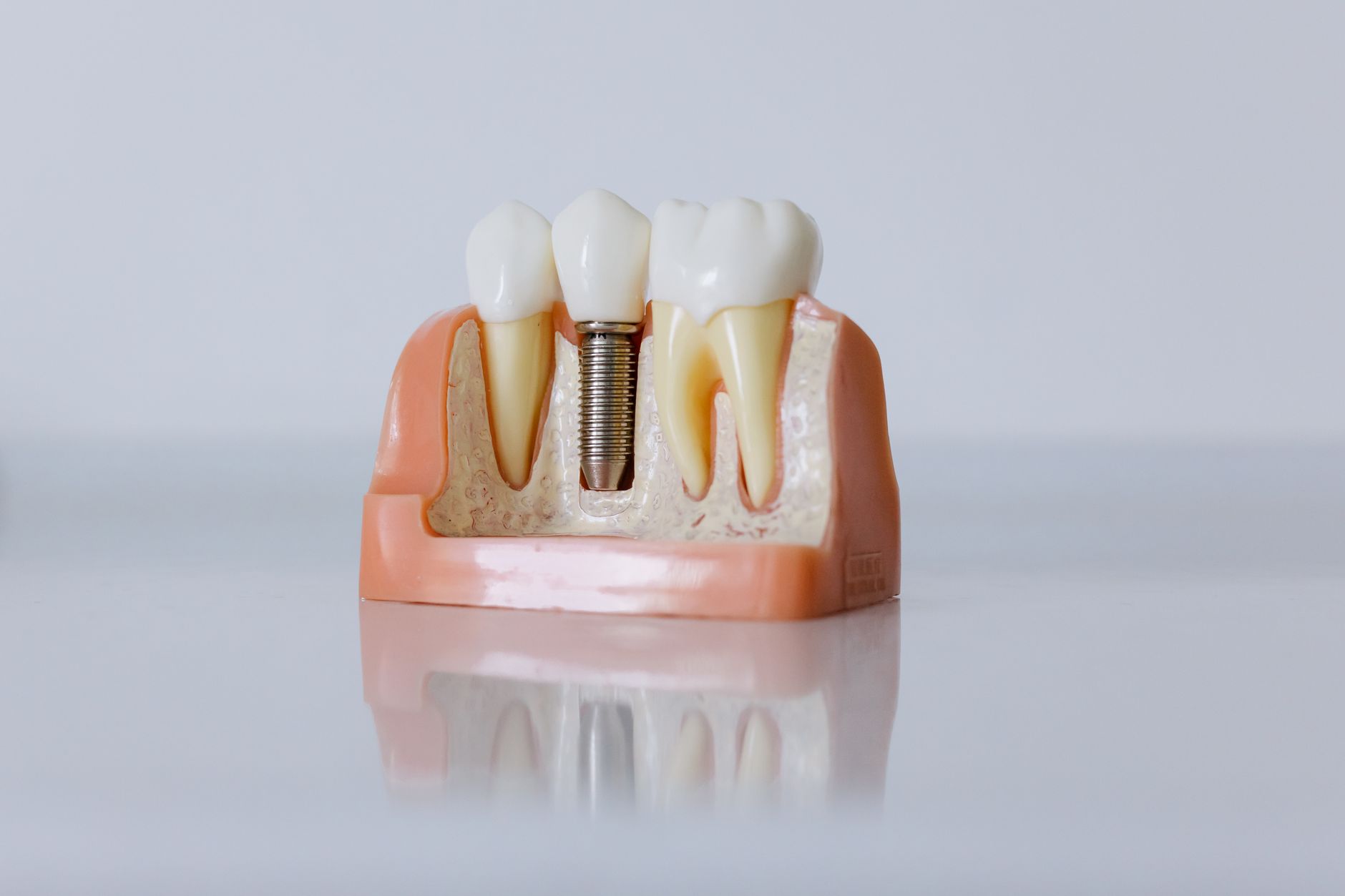
Detailed dental implant model showcasing teeth structure for educational purposes.

Definition: Dental Implants After Gum Disease

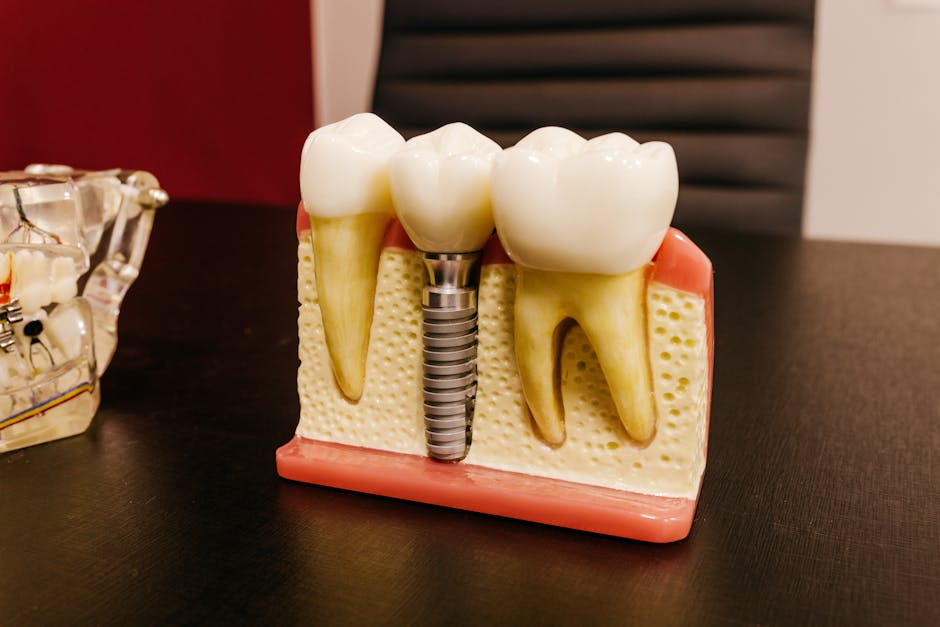
A dental implant is a titanium post that replaces the root of a missing tooth and supports a crown, bridge, or denture. After gum (periodontal) disease, bone and gum loss may occur, making implant planning more complex, but not impossible. Success in these cases depends on eliminating active infection, rebuilding lost bone and tissue as needed, and maintaining strict oral hygiene and regular follow-up care.

Why Stability Comes First After Gum Disease

Stability is the foundation for implant success in patients with a history of gum disease. There are four essential types of stability:

  • Biologic stability: Ensuring the gums are infection-free before, during, and after implant placement.
  • Bone stability: Sufficient bone must be present to anchor the implant securely. Bone grafting may be needed.
  • Gum stability: Restoring and maintaining healthy, attached gum tissue to protect the implant.
  • Bite stability: Preventing excess mechanical forces from uneven chewing, clenching, or grinding.

If stability is compromised at any level, the risk of implant failure increases. That is why, at Blanc Dental Center, we guide our patients through each stage of stability—from infection control to precise surgical placement to maintenance protocols—to optimize their long-term outcome.
Step-By-Step Framework: Implant Planning After Gum Disease

1. Comprehensive Assessment

  • Full examination with medical and dental history review
  • Periodontal charting (measuring pocket depths, mobility, bleeding)
  • Advanced imaging, such as 3D CBCT scans, to evaluate bone and anatomical features
  • Bite assessment and screening for bruxism (grinding)

2. Stabilizing Gum Disease

  • Treat active periodontal infection with deep cleanings (scaling/root planing) and antibiotics as needed
  • Reevaluate in 8-12 weeks to ensure pockets are reduced and bleeding is minimal
  • No implant surgery until gums are stable and bacterial infection is controlled

3. Bone Evaluation and Site Development

  • Measure bone width and height via imaging
  • If deficient, perform bone grafting or ridge augmentation
  • Allow 4-9 months for grafts to mature as needed

4. Guided Implant Placement

  • Use 3D imaging and printed guides for precise implant placement
  • Minimally invasive techniques to protect soft tissues and blood supply
  • Straumann implants for reliability and precision
  • Allow 8-24 weeks for osseointegration (bone healing around the implant), longer if grafting was necessary

5. Prosthetic Restoration and Bite Adjustment

  • Placement of abutments, crowns, bridges, or dentures
  • Careful occlusion (bite) checks to avoid overloading implants
  • Custom night guards provided if grinding is detected
Ceramic dental implants with bolt in artificial mouth piece on desktop in hospital

Best Practices for Success After Gum Disease

  • Address gum infection and inflammation before any surgery
  • Regular home hygiene: brush twice daily for 2 minutes, clean between teeth and around implants with floss or an interdental brush, and use antimicrobial mouthwash as advised
  • Wear a custom night guard if recommended
  • Avoid smoking, which dramatically increases the risk of implant failure
  • Maintain tight control of systemic risk factors, such as diabetes
  • Attend professional cleaning and maintenance visits 3-4 times per year if you have a history of gum disease (frequency based on risk)
  • Choose a clinic, like Blanc Dental Center, that has advanced technology and experienced clinicians specializing in complex implant and periodontal care

Explore more practical advice in our blog on how to check if your gums and jawbone are healthy enough for dental implants.

Risks and Limitations

While dental implants are possible after gum disease, risks for complications such as peri-implantitis (a gum infection affecting implants) are greater. Implants may not be suited to:

  • Patients with uncontrolled gum infection despite treatment
  • Severe, untreated systemic diseases (e.g. uncontrolled diabetes)
  • Insufficient bone when a patient declines grafting
  • Poor compliance with daily hygiene or regular maintenance visits

Natural teeth often have lower complication and correction costs than implants when well maintained. Whenever possible, preserving restorable teeth should be fully explored before considering extraction and implants—our philosophy at Blanc Dental Center always aims to save teeth when possible. Read more on this topic in advanced gum disease and implant planning.

Maintenance Plan: The Key to Long-Term Stability

After your dental implants are placed, ongoing stability depends on a discipline of at-home care and regular professional maintenance. Here’s what we recommend for our patients:

  • Low risk: Dental cleaning and exam every 6-12 months
  • Moderate risk (past gum disease): Cleaning every 4-6 months
  • High risk: Cleaning every 3-4 months

Professional visits include:

  • Monitoring gum health and pocket depths
  • Targeted cleaning (such as Guided Biofilm Therapy)
  • Bite checks to prevent mechanical overload
  • Regular, targeted X-rays to monitor bone levels
Close-up of a dental implant model featuring artificial teeth and jaw structure.

Timeline: What to Expect

  • Initial Consultation: Comprehensive exam, imaging, and risk assessment
  • 0-2 months: Gum disease treatment, reevaluation
  • 2-8 months: Bone grafting and healing, if required
  • 8-10 months: Implant placement and healing (osseointegration)
  • 10-12 months: Final restoration and functional adjustment

Full-arch or multiple implant solutions may take longer, but a precisely designed plan—dependent on individual healing and stability—makes the difference between predictable long-term results and early complications.

How Blanc Dental Center Ensures Stability-First Implant Care

The entire process at our Montreal dental clinics is guided by advanced technology and collective expertise. Our approach includes:

  • CBCT 3D imaging and digital guides to maximize surgical precision
  • Minimally invasive techniques for predictable healing
  • Swiss Straumann implants for proven durability
  • AI diagnostics and photographic documentation for consistent outcomes
  • Mentoring and ongoing training across our dental team for complex restorative and periodontal care
  • Transparent communication throughout every phase of care

Blanc Dental Center serves patients from Saint-Laurent, Côte-des-Neiges, Westmount, Hampstead, Town of Mount Royal, Côte St Luc, Montreal West, and Ville Saint Laurent. We feature two accessible locations with free parking and are open Monday to Saturday, including emergency visits.

You can also learn about our process for full-arch implant solutions and our streamlined, in-house approach to complex cases.

FAQ: Dental Implants After Gum Disease

Can anyone with gum disease get dental implants?

Implants are often possible after gum disease if the infection is controlled, there is enough healthy bone and gum, and the patient commits to maintenance care. Uncontrolled infection or insufficient bone (with refusal of grafting) may be limiting factors.

What is the risk of implant failure after gum disease?

While success rates remain high overall, the risk of complications like peri-implantitis is higher for patients with a past of gum disease. Rigorous stability protocols improve outcomes.

How soon after gum disease treatment can I get implants?

Implant placement typically happens after the gums are stabilized and any bone rebuilding is complete. This may require several months between initial therapy and surgery.

What is peri-implantitis, and how is it prevented?

Peri-implantitis is inflammation and infection around an implant, similar to gum disease. Prevention focuses on thorough hygiene, routine dental cleanings, and ongoing professional monitoring.

How often should I return for maintenance?

Most patients with a past history of gum disease require professional cleaning every 3-6 months, depending on risk factors and gum health.

Should I keep my natural teeth if at all possible?

Yes. Natural teeth, when stable, often have lower risks of complication and correction costs than implants. We explore every option to retain healthy teeth before extraction.

Conclusion

Stability is the nucleus of successful dental implant placement after gum disease. It is built on sound biology, precise diagnostics, cutting-edge technology, and a commitment to long-term care—values at the heart of Blanc Dental Center’s approach. If you are considering dental implants and have a history of periodontitis, trust a team that prioritizes stability at every step.

To discuss your best options for rebuilding your smile and function, or to book a full exam with 3D imaging and expert consultation, start today at Blanc Dental Center. Your long-term stability is our top priority.

Im Vergleich überzeugt das online casino echtgeld mit fairen Boni heute aktuell.
O número de adeptos de apostas online em Portugal continua a aumentar, sobretudo entre quem valoriza pagamentos seguros. Muitos jogadores regulares confiam no winwin pela rapidez dos levantamentos e pela diversidade de mercados desportivos disponíveis. O apoio ao cliente responde com clareza em qualquer momento do dia. Criar conta é gratuito e fica concluído em poucos minutos.
Live dealer tables bring the land-based experience online. The TonyBet Casino live games section covers available tables and providers.