


Blanc Dental Center, also known as Blanc Dentaire, offers AIRFLOW cleaning technology in Montreal. If stains or plaque are collecting around braces or a bonded permanent retainer, we can examine the area and determine whether AIRFLOW is appropriate as part of your professional cleaning. Our clinics are at 4215 Rue Saint-Jacques and 5001 Rue Jean-Talon O.
The distinction is what is causing the colour change. AIRFLOW can help remove accessible surface stains and soft biofilm around orthodontic hardware. It does not remove hardened tartar on its own, and a white mark left by changes in enamel is not the same as a surface stain. An examination helps us choose the right care rather than polishing an area that needs a different approach.
AIRFLOW is a professional cleaning method that directs a controlled stream of air, water and fine powder onto tooth surfaces. Its purpose is to remove soft dental biofilm and external staining. Because the spray can be directed around irregular surfaces, it can be useful where brackets, wires or a fixed retainer make conventional brushing and polishing awkward.
Think of AIRFLOW as one part of a cleaning plan, not a substitute for every other instrument or treatment. A clinician may use other methods to remove calculus, the hardened deposit commonly called tartar. If an area looks discoloured because of decay, enamel changes or a damaged restoration, cleaning alone will not resolve the underlying issue.
A bracket interrupts the smooth front surface of a tooth. The wire running through it adds another edge, and the areas near the gumline remain easy to miss when brushing quickly. A permanent retainer creates a different challenge: it is bonded behind the teeth, so ordinary floss cannot simply slide down through every contact in the usual way.
Soft plaque can collect along these edges. Pigments from drinks and foods may then make deposits more noticeable. Along a bonded retainer, buildup can be difficult to see without a mirror, yet you may notice that floss catches or that the surface feels rough. Location matters as much as colour: a mark on the tooth beside a bracket, a deposit attached to the retainer wire and a patch of changed enamel call for different responses.

The most useful question is not simply, ‘Can this mark be cleaned?’ It is, ‘What is the mark?’ We look at its texture, location and appearance before recommending treatment.
This distinction is especially important when braces have recently been removed. Surface pigment that was hidden near a bracket may clean away, while a white outline or patch in the enamel may remain. We would not want you to assume that more aggressive brushing, a whitening product or another round of stain removal will fix a change that should first be examined.
At Blanc Dental Center, our approach is to identify the deposit, inspect the appliance and check the surrounding gums before deciding how to clean. The sequence may vary with your dental history and what we find.
When you book, mention whether you have active braces or a fixed retainer, which teeth are affected and whether the stain appeared suddenly or gradually. Also tell us about bleeding, sensitivity, pain, food trapping or a wire that feels loose. Those details help us distinguish a routine cleaning concern from a problem that needs a closer examination.
We need to see whether the mark is on a tooth surface, near the bonding that holds an appliance in place, or on a deposit beside the wire. We also look for gum inflammation and hard buildup. If a retainer has shifted or a bracket is loose, that changes the priorities: cleaning cannot secure detached orthodontic hardware.
Where AIRFLOW suits the area being treated, it can address accessible soft deposits and external stains. Where tartar is present, scaling may also be needed. The clinician adapts the plan to the condition of your mouth and appliance rather than assuming the spray alone will reach or correct everything.
A clean tooth gives us a clearer view of any persistent mark. If discolouration remains, the next step depends on its cause. We can explain whether it appears to need monitoring, further assessment or a treatment other than routine hygiene. You should leave understanding the difference between a deposit we removed and an area that needs follow-up.
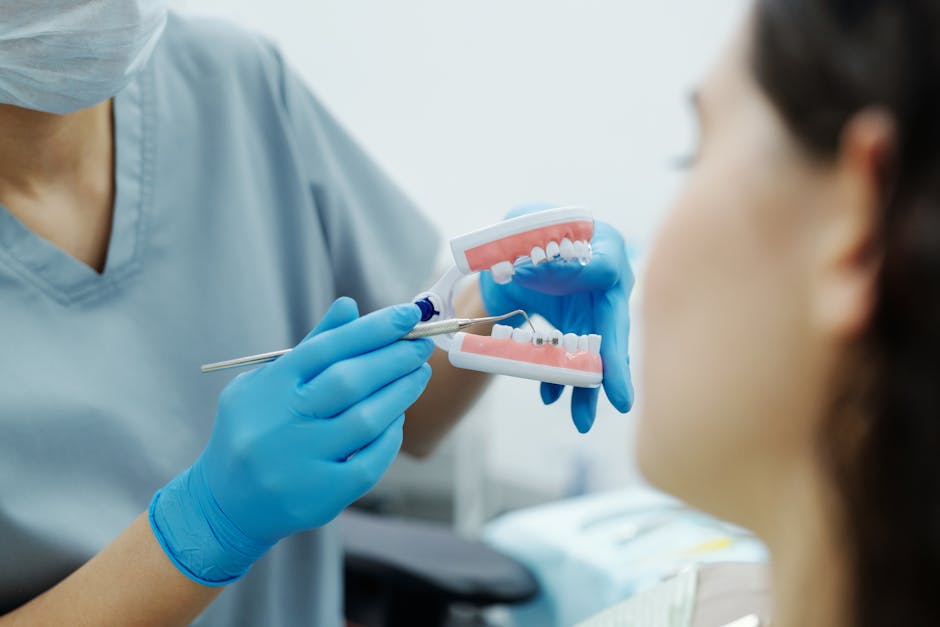
Both appliances can create plaque traps, but they do so in different places. With braces, the visible areas above and below each bracket need attention, as do the spaces beneath the orthodontic wire. With a bonded retainer, the challenge is usually behind the front teeth, particularly where the wire and its bonding points interrupt access between teeth.
AIRFLOW may help clean accessible surfaces around either type of appliance. It cannot take the place of passing an appropriate cleaning aid through a space that remains blocked to ordinary floss. Nor does it guarantee that material hidden beneath a loose bond will be removed. If you notice movement in a retainer wire, tell us before cleaning begins so we can assess it rather than treating it as a stain problem.
Patients sometimes ask whether cleaning around brackets could replace their orthodontic follow-up visits. It cannot. A hygiene visit addresses the teeth and gums; the clinician overseeing your orthodontic treatment remains responsible for evaluating how the appliance is functioning and whether it needs adjustment.
The most effective way to manage staining is to prevent soft plaque from staying around the appliance. Our practical rule is to match the cleaning tool to the obstruction, then check the gumline and the hidden side of the teeth rather than focusing only on the visible stain.
If you are considering whitening because teeth look darker near an appliance, start with an examination and cleaning assessment. Whitening changes tooth colour in a different way from removing external stains, and a bracket or bonded retainer can affect which surfaces are exposed during treatment.
Some changes deserve attention even if your main concern is cosmetic. Let us know if you see a chalky white patch, notice a dark area that does not brush away, have repeated gum bleeding, or feel pain or sensitivity near the appliance. A loose retainer, broken wire or detached bracket also needs assessment rather than just a cleaning appointment.
Bleeding can accompany plaque buildup and gum inflammation, but its cause should not be guessed from appearance alone. Likewise, a stained edge beside bonding may look similar to a problem with the material underneath it. Addressing the cause matters more than making the surface look temporarily cleaner.
If you already have gum disease, your care may differ from a routine hygiene visit. Our guide to periodontal maintenance versus routine cleaning explains why ongoing gum care may follow a different plan.
We welcome new patients and have different appointment types depending on your needs. Existing patients who have had a full examination can choose a recall and cleaning appointment. If a particular stain, bleeding area or retainer problem is your main concern, a consultation lets us focus on that issue. A full examination is generally the starting point for a new patient who needs an overall assessment before routine cleaning.
When contacting us, say that you are asking about AIRFLOW cleaning for stains around braces or a permanent retainer. Include any symptoms and whether you already have a regular dental exam on file with us. You can review the visit options on our appointment page; online availability is displayed in French. Our article on choosing between a full exam, consultation and cleaning can also help you decide what to request.
Free parking is available at both locations. If you would like more background on AIRFLOW and the broader dental services available with us, read our guide to AIRFLOW cleaning in Montreal.
Braces do not automatically rule it out. A dental professional should first inspect the brackets, wires, gums and deposits, then decide whether AIRFLOW is appropriate for the surfaces that need cleaning. Hardened tartar or a damaged appliance may call for another step.
It can help clean accessible surfaces around a bonded retainer, but a fixed wire can obstruct some spaces. Daily cleaning between the teeth remains important. If a deposit seems trapped beneath the wire or bonding, we need to assess the area rather than promise that a spray will reach it.
No. It could be external staining, plaque or hardened buildup, but appearance alone cannot establish the cause. Have the area checked, particularly if floss catches, the wire feels loose or the gum bleeds.
AIRFLOW removes material on the surface; it does not reverse a change within the enamel. White or chalky spots need assessment so you can understand what caused them and what, if any, treatment is appropriate.
No. AIRFLOW addresses soft biofilm and surface staining. Hardened tartar generally needs scaling with appropriate professional instruments. A cleaning visit may involve more than one method.
If external pigment is removed, the teeth may look cleaner and brighter. AIRFLOW does not bleach the underlying tooth colour, so the result is different from a whitening treatment.
Tell us about the loose wire when you contact the clinic. It needs assessment, and cleaning alone will not reattach it. Avoid pulling or bending it yourself.
New patients are welcome. A full examination is generally required before routine cleaning so we can assess your oral health and plan suitable care. If you have a specific immediate concern, describe it when booking so we can help identify the appropriate visit type.
For stains around braces or a permanent retainer, the useful choice is a clinic that can distinguish removable pigment from tartar, enamel changes and appliance concerns before treatment. AIRFLOW is one way we address accessible soft deposits and surface stains, while the examination tells us when another approach is needed. To discuss your situation, contact Blanc Dental Center in Montreal and mention your appliance and the area you would like us to assess.