


For an All-on-4 consultation in Montreal focused on exactly what you would be paying for, contact Blanc Dental Center. We offer dental implant and full-arch care at two Montreal locations. When you book, say that you want to review the treatment by arch and by stage, including diagnostics, any extractions, implant placement, temporary teeth, final teeth and follow-up care.
The key is to ask for an itemized treatment plan, not just an All-on-4 price. A useful plan identifies what is included, what is separate, what depends on the examination and when each stage would occur. We offer both a consultation for a specific concern and a full exam that includes a panoramic X-ray. Complex care may require a full exam and additional tests, so it is worth explaining your goal when making the appointment.
You can reach our Saint-Henri clinic at 4215 Rue Saint-Jacques, Montréal, QC H4C 1J5, (514) 933-3368, or our Jean-Talon West clinic at 5001 Rue Jean-Talon O, Montréal, QC H4P 1W7, (514) 564-4554. Both locations have free parking. The discussion below will help you arrive with questions that turn a broad estimate into a plan you can actually evaluate.
What does an itemized All-on-4 consultation mean?
All-on-4 describes a fixed full-arch restoration supported by four dental implants in one jaw. The upper jaw and lower jaw are separate arches. The phrase describes a treatment approach, not a universal package of services or a guarantee that four implants are the right choice for every patient.
An itemized All-on-4 consultation connects a clinical recommendation to a clear breakdown of the proposed treatment. It should answer two different questions: What treatment is recommended for my mouth, and which parts of that recommendation are covered by the estimate? Neither answer is complete without the other. A list of fees without an examination cannot tell you what you need. A clinical explanation without a clear breakdown cannot tell you what you are agreeing to pay for.
Our practical rule: Separate the plan into four columns in your notes: required treatment, included services, possible additions and future maintenance. If an item does not fit clearly into one of those categories, ask where it belongs before you make a decision.
For example, a quote may refer to implant placement but leave the temporary restoration unclear. Another may describe final teeth without specifying whether the price covers the laboratory work and installation. These are not minor wording differences. They affect what treatment you receive, how you move through healing and how you compare total costs.
How to arrange the right appointment
When you contact Blanc Dental Center, tell us whether you wear dentures, still have teeth that may need attention or are considering treatment for both jaws. Mention that you want to discuss All-on-4 or another full-arch implant option and to understand the treatment components individually. This helps distinguish a complex implant assessment from a routine cleaning appointment.
Our appointment page distinguishes between a consultation for a specific problem and a full exam. The full exam includes a panoramic X-ray. A consultation may involve X-rays or tests, and a full exam may be needed for complex care. You can ask which appointment type makes sense for your situation and whether a separate imaging or planning visit might be necessary.
It is also reasonable to ask when a detailed estimate can be discussed. An initial conversation can clarify your goals, but a meaningful full-arch plan depends on assessing the teeth, gums, jawbone and bite. If you already have recent images or records, bring them. The dentist can then determine whether they are useful and what else may be needed.

How we suggest reviewing an All-on-4 plan, step by step
Blanc Dental Center recommends reviewing a full-arch plan in the order treatment would happen. That makes gaps easier to spot than starting with the final price and trying to reconstruct what it covers afterward.
- Define the scope. Confirm whether the recommendation concerns the upper arch, lower arch or both. Ask how many implants are proposed for each arch and whether treatment would happen together or in stages. A combined number without an arch-by-arch explanation is difficult to interpret.
- Review the assessment. Discuss the exam, existing teeth, gum health, bite and available imaging. Ask which diagnostic services are part of the current appointment and which would be billed separately. A panoramic X-ray and a three-dimensional CBCT scan serve different planning purposes, so do not assume one includes the other.
- Identify preparation before implants. Ask whether extractions, treatment for gum disease, management of infection or bone-related procedures are recommended. Have each necessary procedure identified separately, along with any decision that must wait for further assessment.
- Separate surgery from prosthetics. Confirm what the implant-placement portion covers, then examine the temporary and final teeth as distinct components. An estimate for implants alone is not necessarily an estimate for a functioning full-arch restoration.
- Map follow-up and ongoing care. Ask which healing visits, adjustments and final fitting visits are included, and what routine maintenance or later repairs would cost separately. Confirm when payments are due for each stage.
This approach also gives you a clear way to request revisions. If the dentist recommends a different number of implants after reviewing your anatomy, you can see which parts of the original plan change rather than trying to compare two undifferentiated totals. For more on the first question in this sequence, see our guide to separate upper and lower full-arch treatment plans.
The treatment components to check individually
The following is a review checklist, not a list of services automatically included in every All-on-4 estimate. Your own plan should make each relevant item explicit.
| Component | What to ask | Why it matters |
|---|---|---|
| Examination and imaging | Which exam, X-rays, CBCT scans and records are included? Are additional visits required? | Imaging and assessment shape the implant plan, but appointment and imaging fees may be separate from treatment fees. |
| Existing teeth and gums | Are any extractions or periodontal treatments needed? If so, are they listed individually? | Preparation can change both the sequence of care and the total cost. |
| Implant surgery | How many implants are planned for each arch? What surgical procedures are covered? | A quote for implant placement does not, by itself, describe the replacement teeth. |
| Temporary teeth | Will there be a temporary restoration? Is it fixed or removable, when could it be fitted, and are adjustments included? | The healing phase affects how you eat, speak and manage daily life before the final restoration. |
| Final teeth | What material and design are proposed? Are the connectors, laboratory work, fitting and bite adjustments included? | These details define the restoration you will use after healing. |
| Aftercare | Which postoperative visits, hygiene reviews, repairs and later maintenance appointments are included or separate? | Implant-supported teeth still require professional review and home care. |
| Changes to the plan | What findings might alter the plan, and how would a revised fee be explained before further treatment? | It clarifies how decisions and costs will be handled if clinical needs change. |
The word included should be attached to a specific item, not inferred from a phrase such as complete smile or fixed teeth. If a service is conditional, ask what condition triggers it and whether you would approve an updated plan before it goes ahead.
Diagnostics: panoramic X-ray versus CBCT
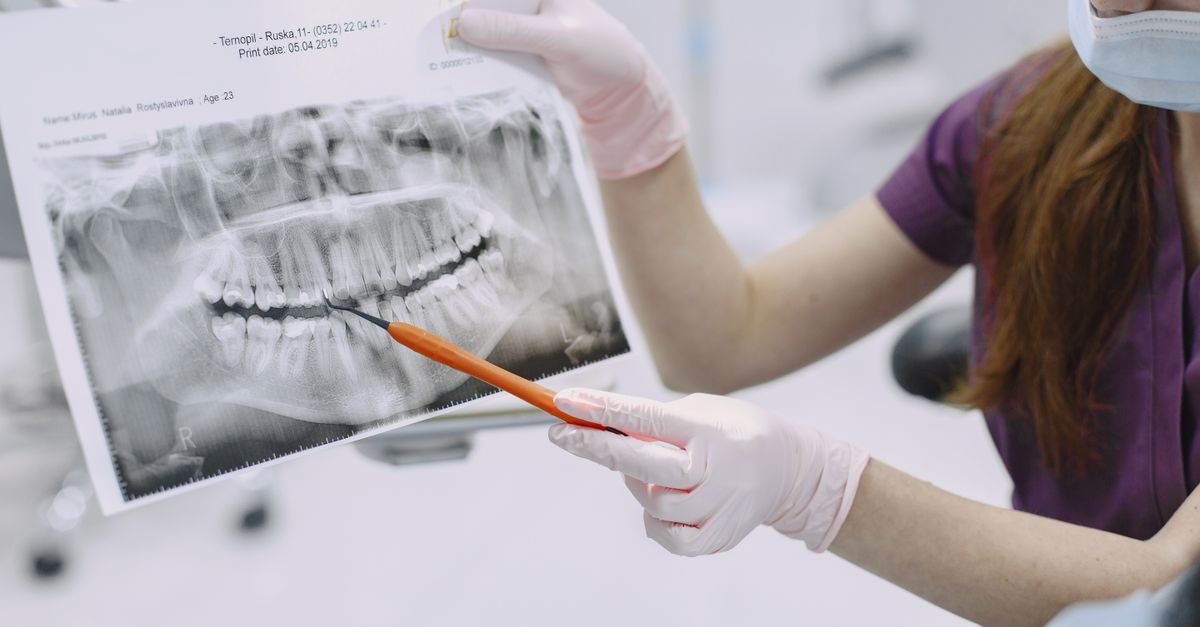
A panoramic X-ray gives a broad view of the jaws and teeth. A CBCT scan provides three-dimensional information that can help assess bone and important anatomical structures for implant planning. The need for each image depends on the clinical assessment. Our full exam includes a panoramic X-ray, and our implant-related technology includes CBCT and three-dimensional planning tools. Ask whether a CBCT is recommended for your case, at which stage it would be taken and how its fee appears in the estimate.
Technology matters because it helps inform a treatment decision, not because a scan by itself determines whether an All-on-4 design is suitable. The dentist must also consider the condition of remaining teeth, gum health, bite and restorative goals. Our article on CBCT dental scans in Montreal explains what patients can ask before imaging.
Extractions and other preparation
If you still have teeth, the consultation should distinguish teeth that can be retained from teeth that may need removal. An extraction is not merely a small add-on to a full-arch estimate. It can affect the surgical plan, healing and the type or timing of temporary teeth. Periodontal problems or infection may also need attention as part of a responsible sequence of care.
Ask the dentist to mark preparation as required now, potentially required after further assessment, or not part of the proposed plan. If bone grafting is raised, ask which area it concerns and whether it would change the timing of implant placement. That is more useful than a general warning that extra work might be needed.
Temporary teeth during healing
Temporary teeth deserve their own discussion because they bridge the period between surgery and the final restoration. Ask whether you would receive a temporary restoration, whether it would be fixed to implants or removable, and what would determine its fitting date. The ability to fit fixed temporary teeth depends on clinical conditions, so do not treat a general same-day or next-day description as a personal guarantee.
Also ask what happens if the temporary teeth need a bite adjustment or repair while healing. Does the estimate cover those visits, or would they be billed separately? Our related article explains how to clarify temporary teeth in an All-on-4 treatment plan.

The final restoration and its fitting
Four implants are supports, not the complete set of teeth. The plan should describe the final full-arch restoration separately from the implants. Ask whether it is fixed in place or removable by the patient, what material is proposed, and whether the estimated fee covers fabrication, connectors, fitting and bite adjustments. If a material is discussed, ask why it suits your case rather than assuming one option is best for everyone.
The estimate should also distinguish the final restoration from the temporary one. They have different purposes and may involve different appointments, materials and fees. A clear sequence prevents a common misunderstanding: believing the teeth fitted during healing are the final teeth, or assuming a final restoration is included because implant surgery is included.
Why two All-on-4 estimates can be hard to compare
All-on-4 is a recognizable term, but different estimates may describe different scopes. One may cover a single jaw while another covers both. One may include temporary teeth while another lists them separately. Diagnostic imaging, extractions, final restorative work and follow-up may also be grouped differently. Comparing headline prices before matching those components can lead to the wrong conclusion.
Start with an arch-by-arch, stage-by-stage comparison. Keep the clinical plans separate from the fees: if one dentist recommends four implants and another recommends a different design, ask each to explain the clinical reasoning. Do not try to make the numbers look equivalent by ignoring a difference in treatment.
A simple way to compare written plans
- Scope: Which jaw or jaws are being treated, and what happens to any remaining teeth?
- Diagnostics: Which examinations and images are included in the stated fees?
- Healing phase: What temporary teeth, visits and adjustments are planned?
- Final result: What final restoration and fitting appointments are included?
- Conditions: Which services are excluded, optional or dependent on findings?
- Aftercare: What is included after delivery, and what becomes routine maintenance?
If you are comparing costs, it can help to look at our discussion of what an affordable implant treatment plan should include. The goal is not to choose the longest list of services. It is to understand the clinical recommendation and the full financial scope of that recommendation.
Could a different full-arch option make more sense?
An itemized consultation should leave room to discuss alternatives. Depending on your teeth, bone, bite, preferences and ability to maintain the restoration, the conversation may include a different fixed full-arch implant design, a removable implant-supported denture or a conventional denture. If some teeth can be kept, a plan focused on retaining them may also be worth discussing. These options are not interchangeable simply because they all replace missing teeth.
A fixed full-arch restoration is secured to implants and is not taken out by the patient for routine cleaning. An implant-supported removable denture attaches to implants but can be removed for cleaning. That distinction affects daily routines, prosthetic design and long-term maintenance. Our clinic provides dental implant care and also discusses removable implant prostheses. The most useful comparison is the one tied to your examination, not a generic ranking of options.
Likewise, four implants should not be chosen solely because the treatment is called All-on-4. If a clinician proposes a different number or placement strategy, ask what clinical finding led to it and how it changes the surgery, restoration and estimate. Our guide to assessing four versus six implants for a full arch can help you frame that question.
Best practices before agreeing to treatment
- Bring a medication list and relevant health history. Conditions and medications can affect surgical planning and healing. Tell the dentist about past implant treatment, extractions or difficulties with dentures.
- Describe what is not working now. Loose dentures, painful teeth, chewing problems and concerns about appearance may point to different priorities in the treatment plan.
- Bring previous dental images or records if you have them. The dentist can review them and decide whether additional imaging is appropriate.
- Ask for the estimate in a form you can review later. Note which items are included, separate or conditional, and request clarification for any unfamiliar term.
- Discuss risks alongside costs. Ask about healing, implant integration, the possibility of changes to the plan and what would happen if the temporary or final restoration needs adjustment.
- Check insurance before relying on a reimbursement figure. Coverage varies by plan and procedure. If you intend to seek preauthorization, ask what treatment details your insurer needs. Our guide to dental insurance preauthorization in Quebec explains the questions to raise.
- Allow for maintenance. The initial treatment estimate and the future cost of cleaning, checks, repairs or replacement are different conversations. Ask about both.
These questions are particularly important if you are deciding whether to treat one arch first or to plan both. Staging can affect the sequence of appointments and payments, but it should be considered together with your bite and the condition of the opposing teeth. For context, read our article on staged dental implant treatment.
Frequently asked questions
Can I ask for an itemized All-on-4 plan before committing to treatment?
Yes. Tell the clinic at booking that you want to understand the proposed services and fees by stage. A patient-specific plan depends on an appropriate examination and any imaging the dentist recommends. You should understand what is included, what is separate and what could change before agreeing to treatment.
Does an All-on-4 consultation automatically include a CBCT scan?
Do not assume it does. Our full exam includes a panoramic X-ray; a consultation for a specific concern may include X-rays or tests. Ask which imaging is recommended for your implant assessment and how it is priced.
Is an All-on-4 quote usually for both upper and lower teeth?
There is no safe assumption. All-on-4 refers to treatment of an arch, and the upper and lower jaws need their own assessment. Ask the dentist to identify each arch and its fees separately, even if the two are discussed in one consultation.
Will I have fixed temporary teeth immediately after implant placement?
That depends on the clinical plan and conditions at surgery. Ask what type of temporary teeth are proposed, when they could be fitted, what the alternative would be if immediate fixed teeth are not appropriate, and whether their cost is included.
Should extractions and bone grafting be separate line items?
They should be identifiable in the plan if they are recommended. Ask which procedures are required, which are conditional and whether the stated fee covers them. The same applies to gum treatment or management of infection before implant placement.
What is the difference between an implant-supported denture and fixed All-on-4 teeth?
An implant-supported removable denture can be taken out by the patient for cleaning. A fixed full-arch restoration remains secured to the implants during normal daily use. Ask how the proposed design affects cleaning, maintenance and the estimate.
Are follow-up visits and future repairs part of the original fee?
That depends on the individual estimate. Ask which postoperative checks and adjustments are included, when any included follow-up period ends, and how later maintenance or repairs are charged.
Make the treatment plan as clear as the treatment goal
An All-on-4 consultation is most valuable when you leave knowing both why a particular full-arch approach was recommended and what its estimate covers. Review the plan by arch, then by diagnostics, preparation, surgery, temporary teeth, final teeth and aftercare. Ask for any exclusions or conditional procedures to be identified just as clearly as the included services.
If you are considering full-arch implants in Montreal, contact Blanc Dental Center to arrange an assessment and tell our team that you would like to discuss the components of your treatment plan in detail. We see patients at Rue Saint-Jacques and Rue Jean-Talon O, and we can help you choose the appropriate appointment type for your concerns.