


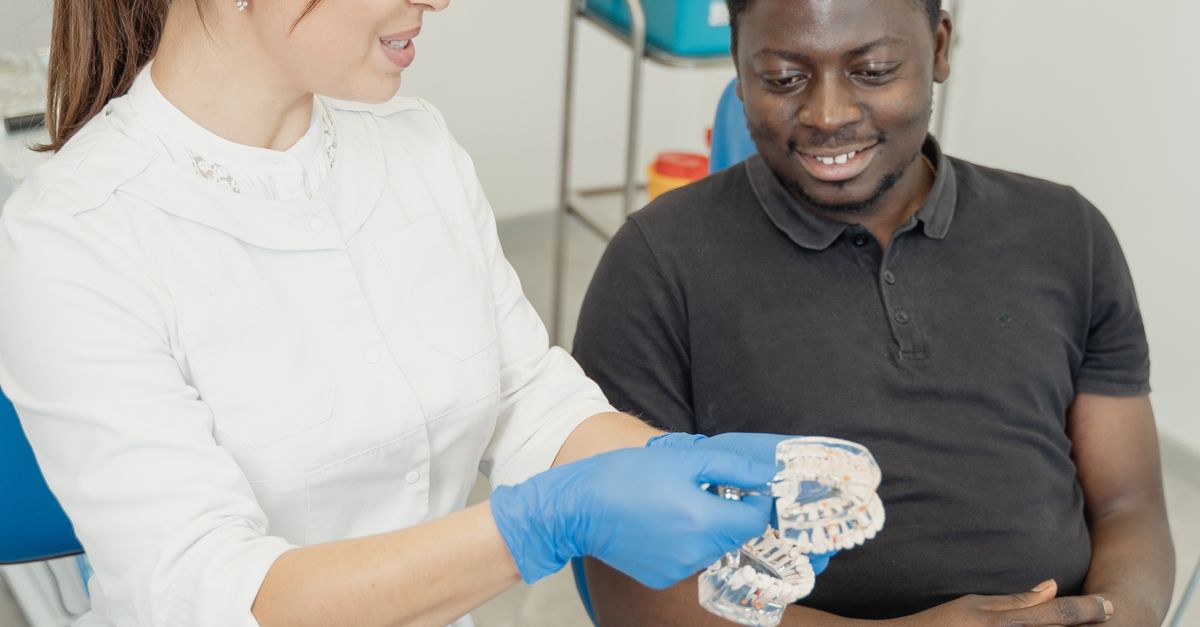
You can ask an implant dentist at Blanc Dental Center whether your upper and lower teeth need separate full-arch treatment plans. We offer dental implant and full-arch care at two Montreal clinics: 4215 Rue Saint-Jacques and 5001 Rue Jean-Talon O. When booking, say that you want both jaws assessed, even if only one arch is currently causing trouble.
A full-arch plan concerns the teeth in one jaw. Needing treatment in the upper arch does not automatically mean the lower arch needs implants, or vice versa. The decision depends on the condition of each arch and how the upper and lower teeth will meet after treatment. A useful consultation answers two distinct questions: What does each arch need? and How will the two arches function together?
When you call: Ask for an implant consultation to discuss your upper and lower arches separately. For Saint-Jacques, call (514) 933-3368. For Jean-Talon O, call (514) 564-4554. You can also request an appointment online.
What does a separate full-arch treatment plan mean?
An arch is the upper or lower row of teeth. Full-arch treatment addresses an entire arch rather than a single missing tooth. An implant-supported full-arch restoration is one possible approach when teeth across that arch are missing or cannot be retained. Other patients may be better served by preserving natural teeth, replacing only some teeth, or using a removable option.
Separate plans do not mean treating the jaws as unrelated projects. Each arch has its own teeth, gum tissues, bone anatomy and treatment needs. Yet the finished upper and lower teeth must meet in a workable bite. That is why the dentist should assess each jaw individually, then coordinate the recommendations.
At Blanc Dental Center, that question belongs in a broader discussion of implant treatment, restorative care and the health of teeth that might be kept. Our services include dental implants, All-on-4 and full-arch care, as well as crowns, bridges, periodontal care and extractions. The point of considering these options together is not to assume every tooth should be replaced. It is to understand what treatment each arch actually requires.
One arch needs extensive treatment
If the upper teeth are failing but the lower teeth are stable, the upper arch may need a full-arch plan while the lower teeth need routine care or limited restorative work. The new upper teeth still have to be designed with the lower bite in mind.
Both arches need attention
If both jaws have widespread tooth loss, failing teeth or unstable restorations, each arch may need its own treatment plan. The dentist must also plan how the two proposed sets of teeth will function together, whether care is simultaneous or staged.

Why the upper and lower jaws can need different care
Patients often ask for one answer about their whole mouth. Clinically, it is more helpful to ask a series of smaller questions. A jaw with several teeth that can be restored is different from a jaw with extensive tooth loss. Likewise, a stable opposing denture presents a different planning problem from worn natural teeth. The assessment should distinguish those situations before anyone discusses implant numbers or a final prosthesis.
Which teeth are worth preserving?
Before deciding on full-arch replacement, a dentist needs to assess the remaining teeth. Decay, fractures, previous root canals, loose teeth, gum support and existing crowns or bridges can all affect the outlook. A tooth with a repairable problem should not be treated as identical to a tooth that cannot be predictably restored.
Ask for the reasoning behind any proposed extraction. It is reasonable to want to know whether a tooth might instead be treated with periodontal care, a root canal, a crown or another restoration. If several teeth are failing, the dentist also needs to consider whether preserving a few would provide a durable, cleanable result or leave you facing repeated treatment. The answer may differ between your upper and lower jaws.
What do the gums and jawbone allow?
Gum inflammation and bone loss matter both for keeping natural teeth and for planning implants. If periodontal disease is active, controlling it may be part of the treatment sequence. A history of gum disease also makes ongoing maintenance an important part of the conversation, even after teeth are replaced.
The anatomy of the upper and lower jaws is different. In the upper jaw, implant planning may need to account for the sinus region. In the lower jaw, the location of the nerve is an important consideration. Imaging helps the dentist understand the available bone and the location of these structures. A three-dimensional scan may be recommended when it is needed to assess implant sites and plan treatment. For more on the role of imaging, see our guide to CBCT dental scans in Montreal.
How will the teeth meet?
The opposing arch is not an afterthought. If new implant-supported teeth will meet natural teeth, an existing denture or another implant restoration, the dentist must assess the contact between them. Worn teeth, missing back teeth, an uneven bite or limited room for a restoration can change the proposed design.
For example, imagine that your lower denture moves when you chew while your upper teeth are stable. A lower implant option might address the denture problem without replacing the upper teeth. The dentist would still evaluate whether the upper teeth provide a suitable opposing bite. Now imagine that both arches have extensive wear and missing teeth. Planning only the more uncomfortable arch could overlook how the other arch affects the final tooth position and chewing contacts. These are illustrations of the questions to investigate, not diagnoses.
How an implant consultation can answer the question
The best appointment is one that lets the dentist examine the whole mouth while keeping the recommendations for each arch clear. Our appointment options include a consultation for a specific concern, which may involve X-rays or tests, and a full exam that includes a panoramic X-ray. Complex care may require a full exam. If you are unsure which to choose, explain that you are considering treatment for one or both full arches when you contact us.
- Explain the problem in each jaw. Tell the dentist where you have pain, loose teeth, trouble chewing or a denture that moves. Mention concerns that seem less urgent, too. An upper arch that feels fine may still need evaluation as the opposing bite.
- Review health and dental history. Bring a medication list and explain relevant medical conditions, smoking or vaping, previous extractions, implants, gum treatment and denture use. These details can affect the discussion of surgery, healing and maintenance.
- Examine the teeth, gums, restorations and bite. The dentist can evaluate which teeth may be kept, what existing dental work needs attention and how the arches meet. A treatment recommendation should connect those findings to your goals rather than rely on the appearance of a scan alone.
- Review appropriate imaging. A panoramic X-ray is part of our full exam. Additional X-rays or three-dimensional imaging may be considered as needed for a complex implant plan. Digital scanning and imaging can help document anatomy and support planning, but they do not replace an examination.
- Discuss an option for each arch, then coordinate them. Ask what is recommended for the upper jaw, what is recommended for the lower jaw, and why. If both need care, ask whether one can be treated before the other and how your bite would function between stages.
Blanc Dental Center uses technology that includes CBCT imaging, digital scanners and 3D guides in implant care. Dr. Dan Munteanu has training in implantology and surgery, while our group practice also brings restorative and complex prosthetic experience to treatment discussions. Technology is most useful when it helps us explain a clinical finding clearly: what can be preserved, what may need replacing and what information is still needed before a final decision.

One arch, both arches or a mixed approach?
There is no rule that both jaws must receive the same restoration. A recommendation should follow the condition of the teeth and supporting tissues in each jaw, your ability to clean the proposed result, and how the upper and lower teeth will work together.
| Possible approach | When it may be discussed | Question to ask |
|---|---|---|
| Full-arch treatment in one jaw | One arch has extensive tooth loss or failing teeth, while the opposing arch can function with the proposed restoration. | What care, if any, does my opposing arch need before we proceed? |
| Plans for both arches | Both jaws have extensive problems that call for coordinated reconstruction or replacement. | Will the jaws be treated together or in stages, and how will I function between stages? |
| Implant treatment in one arch, restorative care in the other | One jaw may need broad tooth replacement while teeth in the other can be retained with appropriate care. | Which teeth can be kept, and how will the planned restorations meet? |
| Removable restoration or another alternative | Implant-supported fixed teeth may not be the preferred option for every arch or patient. | How would this option affect cleaning, stability and maintenance? |
A removable implant-supported denture and a fixed full-arch implant restoration are not the same thing. They differ in how they are retained and how patients clean and maintain them. If you already wear a denture, bring it to the appointment. Its fit, movement and the way you bite against it can help focus the discussion. Our article on All-on-4 implants versus dentures explores some of the practical distinctions.
Likewise, All-on-4 is a treatment approach, not a reason to remove teeth in both jaws. Whether it is appropriate, whether a different implant configuration is considered, and whether the upper and lower arches need different designs are questions for an individual assessment. A label or advertised implant count is not a substitute for evaluating your anatomy and the planned teeth.
What to request in a clear treatment explanation
When the consultation moves from possibilities to a proposed plan, ask the dentist to explain the upper and lower recommendations separately. This makes it easier to understand what is necessary, what is optional and which decisions depend on further assessment. It also helps you compare alternatives without confusing treatment for one jaw with treatment for your whole mouth.
- Condition of the remaining teeth: Which teeth can be maintained, which have an uncertain outlook and which are recommended for extraction? Ask why.
- Proposed restoration for each arch: Is the recommendation to keep natural teeth, use individual restorations, consider a removable denture or plan a full-arch implant restoration?
- Imaging and preparation: What examinations or images are needed before the recommendation can be finalized? Does gum disease or another issue need attention first?
- Sequence: If both arches need care, what happens first? What would you wear or use for chewing between treatment stages?
- Opposing bite: How will the proposed upper teeth work against the lower teeth or restoration, and vice versa?
- Maintenance: How would you clean the result, and what follow-up care should you expect?
- Scope and fees: Does the estimate distinguish the upper arch from the lower arch? Ask whether it includes items such as extractions, provisional restorations, additional procedures and the final restoration, as applicable to your plan.
If timing or costs make you consider treating one jaw first, say so early. Staging can be discussed, but it should not be decided only by which arch hurts most or which estimate is smaller. The dentist needs to consider whether the untreated arch provides a workable opposing bite during the transition. Our articles on staged dental implant treatment and treatment sequencing in full-mouth rehabilitation offer more questions to bring to that conversation.
A practical way to review a proposal: Draw two columns, upper and lower. Under each, write down the teeth to keep, proposed treatment, any preparatory care and the restoration being considered. Then add one shared line for the bite between the arches. If any part of that outline is unclear, ask your dentist to walk through it before deciding.
How to prepare for your Montreal visit
You do not need to decide in advance whether you want implants in one jaw or both. It is more useful to arrive with an accurate description of your concerns and any records you already have. Bring your current denture if you wear one, even if you dislike its fit. Bring a medication list, information about relevant health conditions, and previous dental images if they are available. The dentist can determine whether those images answer the current planning questions or whether additional views are needed. Our guide to reviewing existing dental X-rays for implant planning explains why that distinction matters.
It also helps to describe what you want treatment to change. Is your main concern a loose lower denture, upper teeth you cannot chew with, teeth that are repeatedly breaking, or uncertainty about whether some natural teeth can be saved? If you have been told that both arches need replacement, ask which findings led to that recommendation. If you have been told that only one arch needs treatment, ask how the opposing arch was assessed.
We welcome new patients at our two Montreal locations. The Saint-Jacques clinic serves the Saint-Henri area, while the Jean-Talon O clinic is convenient for patients coming from Saint-Laurent, Town of Mount Royal and nearby neighbourhoods. Both locations offer free parking. Booking the appropriate exam or consultation gives you space to discuss the condition of both jaws rather than seeking a quick answer based on one troublesome tooth.
Frequently asked questions about upper and lower full-arch plans
If I need a full upper arch, do I automatically need a full lower arch?
No. The lower teeth or restoration should be evaluated because they will meet the new upper teeth, but they do not automatically need to be replaced. Their condition and the bite determine whether lower-jaw treatment is recommended.
Can my upper and lower arches have different types of restorations?
Yes, different approaches may be considered for the two jaws. For instance, one arch may be evaluated for implant-supported replacement while the other retains natural teeth. The dentist must assess how the two restorations, or a restoration and natural teeth, will function together.
Should I ask for two separate estimates?
Ask for a clear breakdown showing what is proposed for each arch and which services belong to each part of the plan. If care is staged, ask which fees relate to preparation, interim teeth and final restorations. This makes the scope of treatment easier to understand.
Can one arch be treated first?
Sometimes a staged approach can be considered. Whether it makes sense depends on the condition of the opposing arch, the planned bite, any active dental problems and the sequence of necessary care. Ask what you would use for chewing and how the untreated arch would be managed between stages.
Does a panoramic X-ray tell the dentist everything needed for full-arch implants?
Not always. A panoramic image gives a broad view, but complex implant planning may call for further examination or imaging. The dentist should explain what each image is intended to answer and whether a three-dimensional assessment is needed.
What if I still have several teeth in each jaw?
Having remaining teeth does not, by itself, tell you whether full-arch replacement is appropriate. Ask for an assessment of which teeth can be maintained and why any proposed extractions are recommended. The answer may be different in the upper and lower jaws.
What if only my lower denture moves?
Tell the dentist exactly when it moves and bring the denture to the visit. The lower arch may be the main treatment concern, but the upper teeth or denture still need assessment because they influence the bite and the proposed lower restoration.
Do I have to choose All-on-4 before booking?
No. Describe the problem you want to solve and ask for an implant consultation. The dentist can explain whether a full-arch implant approach, a removable option, preserving teeth or another restorative approach should be considered after examining you.
Get an answer for each arch, and for your bite as a whole
The most useful full-arch consultation does not assume that two jaws need identical treatment. It establishes what can be kept, what each arch may need and how the finished teeth would function together. If you are weighing upper, lower or two-arch implant care in Montreal, contact Blanc Dental Center to discuss an appointment at our Saint-Jacques or Jean-Talon O clinic.