Artificial intelligence (AI) has significantly enhanced the way dentists review and interpret dental X-rays. At Blanc Dental Center in Montreal, we integrate advanced AI-powered imaging as part of our commitment to precision, transparency, and patient-centered care. AI systems support our experienced dental team by analyzing digital X-rays, highlighting abnormalities, and improving the consistency and speed of diagnostics, all while leaving clinical decision-making firmly in the hands of our highly trained dentists.
This technology benefits both patients and clinicians by detecting dental concerns—such as early cavities, bone loss, and infections—faster and with greater clarity. Patients gain a clearer understanding of their oral health and treatment options, while dentists can prioritize early, minimally invasive interventions. AI-assisted X-ray analysis is now a key component in the delivery of high-quality dental care at Blanc Dental Center, especially for complex cases like implant planning and advanced restorative treatments.
What Is AI-Assisted Dental X-Ray Review?
AI-assisted dental X-ray review uses computer algorithms to analyze radiographic images, identify patterns associated with common dental conditions, and visually mark findings for rapid clinical assessment. At Blanc Dental Center, this means your digital X-rays are reviewed not only by your dentist, but also by advanced software that flags features like cavities, bone loss, or potential infections for additional analysis.
Step-by-Step: How AI Integrates With Dental X-Ray Review
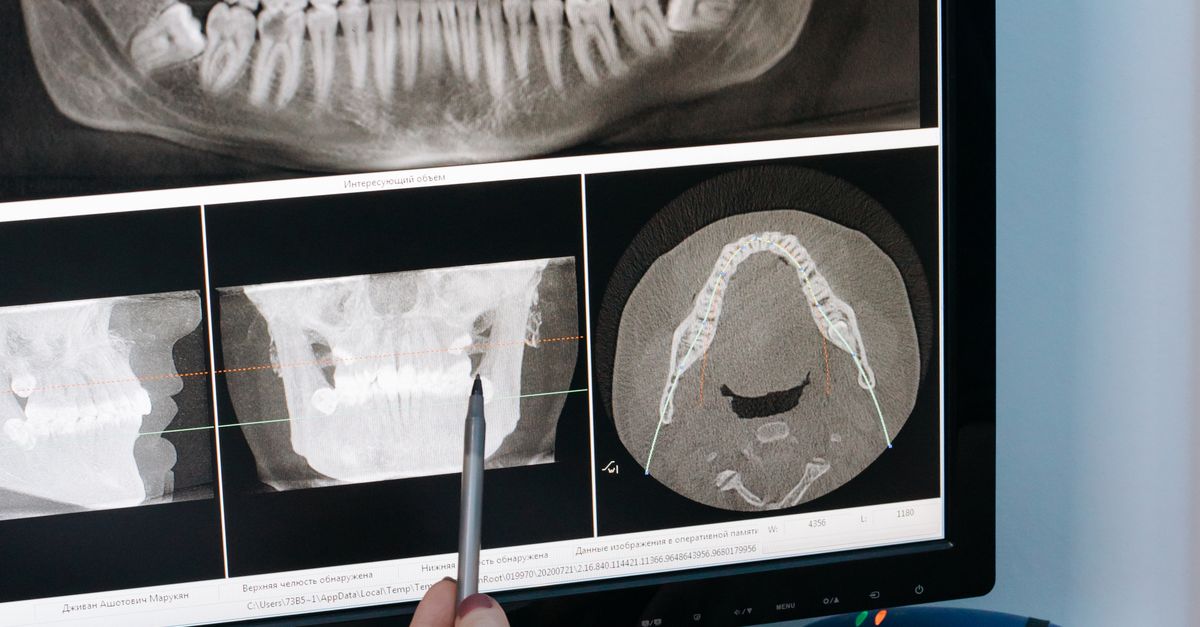
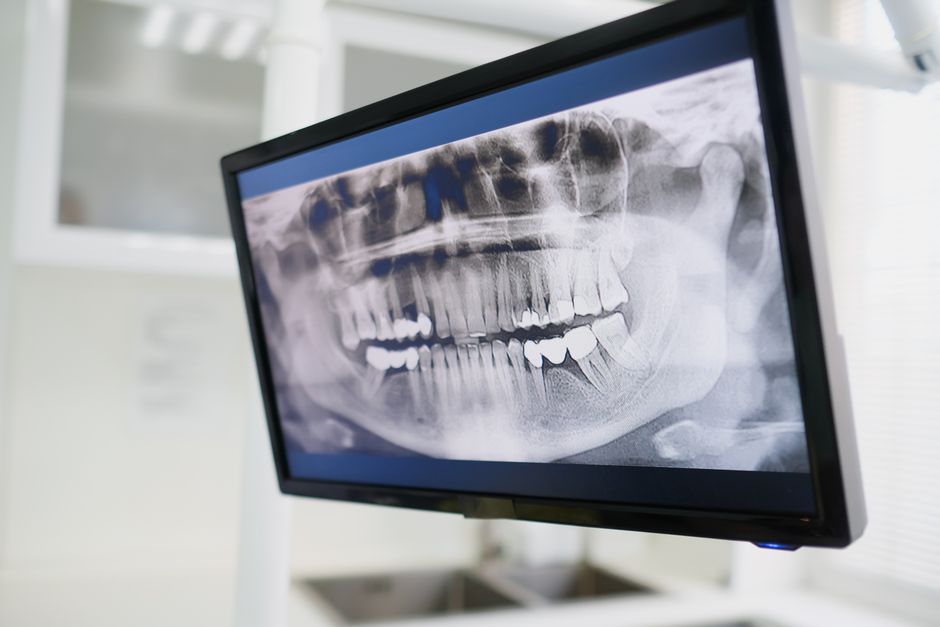
The dental team takes a digital X-ray (bitewing, panoramic, periapical, or CBCT scan), ensuring precise and clear imaging.
AI software rapidly analyzes the image, processing thousands of data points in seconds.
Potential findings—such as early cavities, periapical lesions, or marginal bone changes—are highlighted with visual overlays, color coding, or measurement bars.
The dentist reviews the AI-marked image along with the unaltered original, using their clinical expertise to verify, interpret, and contextualize any flagged areas.
Both the diagnostic results and annotated images can be used to explain findings to the patient, improving understanding and transparency.
Why Dentists at Blanc Dental Center Use AI in X-Ray Analysis
Integrating AI allows our team to:
Improve early detection: AI excels at detecting small cavities and bone changes that might be missed in the earliest stages of disease progression.
Enhance documentation: Automatic charting and visual annotation make record-keeping and treatment tracking more consistent across visits.
Facilitate clear communication: With color-coded overlays and measured findings, patients see exactly what their dentist sees, empowering them with clear information about their oral health.
Increase efficiency: AI speeds up analysis, supporting our dentists in delivering timely care without sacrificing thoroughness or accuracy.
Common X-Ray Tasks Enhanced by AI
Cavity detection: Even subtle or early-stage decay is easier to spot when AI algorithms highlight suspect areas.
Bone level analysis: Tracking bone support is crucial in gum disease and implant dentistry. AI helps document bone changes over time.
Infection identification: AI can highlight periapical lesions that may indicate the presence of infection around tooth roots.
Tooth charting: Assigning numbers to teeth and marking restorations is expedited, streamlining patient records.
Restorative and implant assessment: AI-supported imaging aids in evaluating existing crowns, bridges, and implants for proper fit and health.
Image enhancement: Algorithms may reduce noise or clarify features in digital images, making interpretation more reliable.
Strengths and Limitations of AI in Dental Radiology
Strengths
Consistent detection of visual patterns and anomalies in X-rays
Visual annotation supports faster and more objective review
Facilitates longitudinal monitoring by comparing past and present images
Ideal second opinion for busy dental teams and complex cases
Limitations
AI is a support tool—not a substitute for clinical judgment and in-person examination
Performance may vary by image quality, type of restoration, or complexity of the clinical case
False positives can occur, which dentists must verify and interpret
Comprehensive patient-level diagnosis still requires a dentist’s integration of symptoms, medical history, and clinical examination
What an AI-Supported X-Ray Appointment Looks Like at Blanc Dental Center
During your visit, here’s how AI-enhanced dental X-ray review typically unfolds:
Our team captures a high-quality digital X-ray suitable for AI analysis.
The AI system processes the image instantly and flags any features that need clinical attention.
Your dentist personally reviews both the original and the AI-enhanced X-ray, combining AI insights with clinical context.
We discuss the annotated findings with you, explaining treatment options, monitoring strategies, or preventive care measures.
Throughout the process, patient care remains at the center—the final diagnosis and all recommendations come directly from your dentist, with AI providing an extra layer of support.
Clinical Scenarios Where AI Shines
Early decay or small cavities: AI is highly sensitive at identifying small lesions that may be invisible to the naked eye or on initial review.
Gum disease management: Automated bone level measurements assist in monitoring periodontal stability or progression.
Implant diagnostics and planning: For treatments such as dental implants, AI aids in assessing bone volume, implant integration, and surrounding tooth health.
Complex cases: When multiple restorations, crowns, or root canals are involved, AI provides clarity in distinguishing between various treatment areas.
Best Practices for Dentists Using AI in Radiology
Always combine AI findings with a thorough clinical assessment.
Communicate openly with patients, sharing images and annotated features to guide decision-making.
Understand that AI may suggest more findings than are actually clinically significant—false positives should be carefully reviewed before recommending treatment.
Regularly update software and training to ensure optimal accuracy and workflow integration.
Why Choose Blanc Dental Center for Advanced X-Ray Diagnostics?
At Blanc Dental Center, we focus on transparency and education. By using AI-supported imaging, we give you the clearest understanding of your oral health status and support informed decision-making. Our dentists are continually trained on integrating the latest diagnostic technologies, including digital radiography and AI tools, while upholding our core values of respect, teamwork, and clinical excellence.
This advanced diagnostic approach provides significant benefits for complex restorative cases, implant dentistry, and preventive care for the whole family. For a deeper understanding of how digital technology improves treatment precision, see our guide: How Digital Scans and 3D Imaging Can Improve Dental Planning in Montreal.
Frequently Asked Questions About AI in Dental X-Ray Review
What can’t AI in dentistry do yet?
AI is a supplement, not a replacement. It cannot factor in pain, swelling, the sequence of dental history, or nuances that only a clinical exam and patient conversation reveal. Dentists must interpret and confirm AI-suggested findings before making any diagnosis or treatment decisions.
Is AI analysis safe and private?
At Blanc Dental Center, digital imaging and AI review are handled in compliance with patient privacy and confidentiality regulations, ensuring your health information is secure and only accessed by your authorized care team.
How accurate is AI for dental X-rays?
Research shows strong performance in identifying cavities, bone changes, and other specific features, but overall treatment planning and case assessment still depend on a qualified dentist’s review.
Will I see the annotated X-ray images during my appointment?
Yes. We regularly use annotated X-ray images during consultations to help you visualize problem areas and understand the rationale for recommendations such as fillings, crowns, root canals, or implants.
Can AI help with all types of dental imaging?
AI supports many types of imaging, including bitewings, periapicals, panoramic images, and CBCT scans, but may be less useful with images of lower quality or in the presence of significant metallic restorations. Your dentist will decide when and how AI adds value for your case.
How does AI support implant dentistry?
AI can help assess bone quality, detect changes that could affect implant success, and highlight potential issues around existing implants. This supports our clinic’s expertise in implant dentistry and ensures thorough planning and follow-up.
Summary and Next Steps
AI helps dentists at Blanc Dental Center deliver more accurate, efficient, and transparent care—especially when it comes to interpreting dental X-rays. We believe in combining cutting-edge technology with clinical expertise to help you achieve and maintain the best possible oral health.
If you’re in Montreal and want an expert, tech-forward dental team for preventive, restorative, or implant care, explore our website or contact us today to discuss how digital and AI-supported imaging can benefit your next visit.