



A new partial denture can make chewing feel less predictable and temporarily change the way you pronounce certain words. The appliance replaces missing teeth, but it also introduces new surfaces for your tongue and cheeks to work around. Small bites, softer foods, and speaking practice usually make the transition easier. Persistent pain, repeated movement, or a bite that feels wrong calls for a dental assessment, not more practice.
At Blanc Dental Center, we look at comfort and function together: how the partial sits against the gums, how it stays in place, how the remaining teeth meet, and whether speech improves as you get used to it. Adjustment varies with the number and position of missing teeth, the denture design, and the health of the supporting teeth and tissues. There is no single schedule that applies to everyone.
A partial denture is a removable appliance that replaces some, but not all, teeth in an upper or lower arch. Artificial teeth are attached to a base or framework. Depending on its design, the appliance may rest on the gums and use remaining teeth for support or retention. An upper partial may also extend across part of the palate.
Unlike a fixed bridge or an implant-supported restoration, you can take a conventional partial denture out for cleaning. That distinction matters during adjustment. The appliance needs to resist movement while you chew and speak, but it does not feel exactly like natural teeth. Your tongue, cheeks, and jaw gradually learn how to work with its shape.
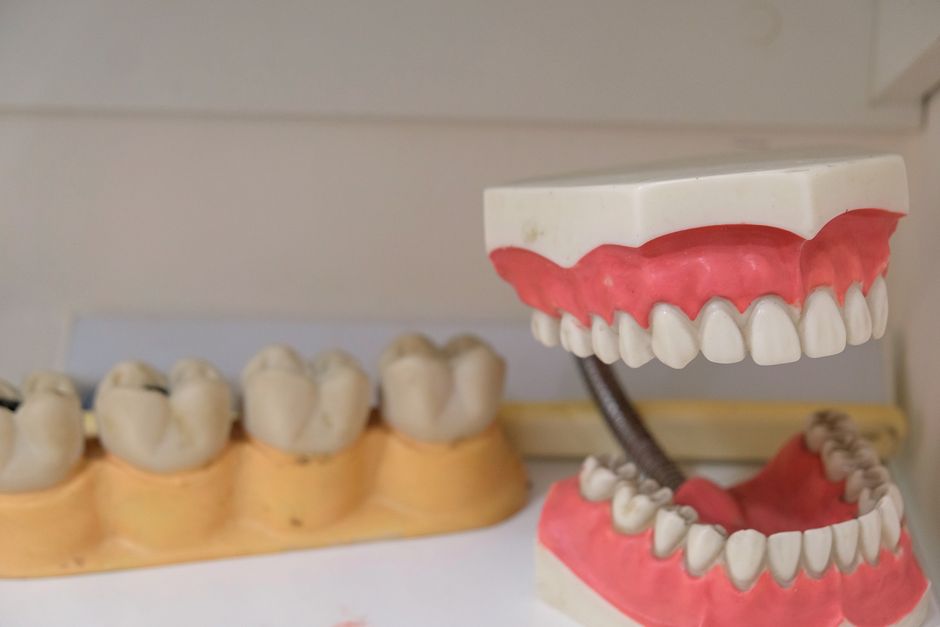
Natural teeth are anchored in the jaw and give you useful feedback about where food is and how hard you are biting. A removable partial transfers some chewing pressure through its supporting teeth and tissues. You may therefore need to slow down and relearn how to guide food between the biting surfaces.
The location of the missing teeth makes a difference. Replacing back teeth may change where you can grind food effectively. Replacing front teeth may make biting into a sandwich or firm fruit awkward at first. In either case, attempting a large bite can tip or shift an appliance that feels stable when your mouth is at rest.
The goal is not to force yourself to chew through pain. It is to build control with manageable foods while noticing whether the partial stays reasonably stable and comfortable. If it rocks every time you bite, ask for a fit and bite check.
Think of food texture as a progression rather than a calendar. Start with meals you can control easily, then try firmer foods as chewing becomes more comfortable. If your dentist has given you instructions after an extraction or another procedure, follow those instructions before expanding your diet.
Sticky sweets, chewing gum, hard candy, ice, and tough foods are poor tests of a new partial denture. They can place awkward forces on the appliance or its supporting teeth. Being able to eat a soft meal comfortably is useful progress; it does not mean you need to challenge the denture with the hardest food you can find.
Clear speech depends on precise contact between the tongue, lips, teeth, and palate. A partial denture changes some of those contact points. An upper partial that covers part of the palate, for example, may make your tongue feel as though it has less room. Replacing front teeth can also change the surfaces your lips and tongue use to form sounds.
You might hear a temporary lisp, notice extra saliva, or find that certain words take more effort. Sounds such as “s,” “t,” “d,” and “th” may draw your attention because they depend on careful tongue placement. These changes do not necessarily mean the appliance is defective. Your mouth may simply be learning its new contours.
There is, however, an important distinction between unfamiliar speech and a partial that will not stay put. If it lifts or clicks when you talk, or if pronunciation remains difficult despite regular practice, the fit and tooth positions may need review. Practice can improve coordination; it cannot correct every mechanical problem.
Check that the partial is seated as your dentist showed you before practising. If you have to hold it in place with your tongue to finish a sentence, let your dental team know.

A new appliance often feels noticeable even when it fits well. Your tongue may keep finding its edges, and you may need to concentrate more during your first few meals. What we do not want you to ignore is a pattern of pain or instability.
These symptoms can have different causes. A localized pressure area may need a small professional adjustment. A changed bite, worn or damaged component, or changing gum shape may require another approach. Our guide to denture sore spots explains why the exact location of irritation matters.
Do not file the base, bend a clasp, or try to reshape the denture yourself. Removing material from the wrong place can reduce support, and bending a clasp can affect how the partial holds onto a tooth. Tell the dentist when the pain occurs, what food brings it on, and which area feels sore. Those details help distinguish a chewing problem from a pressure point.
A useful adjustment visit begins with your experience, not just a look at the appliance. We want to know whether the problem occurs when you first insert the partial, after wearing it for a while, when you bite, or when you speak. Each pattern points to something different.
The dentist can examine the gums and supporting teeth, check that the partial is seated correctly, and evaluate how the teeth meet when you close and chew. The appliance itself can be checked for movement or damage. If there is a sore area, identifying its exact location helps guide any adjustment. Sometimes the concern is not the denture alone: a painful supporting tooth or a change in the gums may also affect comfort.
If a partial that once worked well has gradually become loose, repeated practice is unlikely to restore its original fit. Changes in the supporting tissues or teeth may call for a different solution. Our article on when a denture may need a reline or replacement explores that distinction in more detail.
Good hygiene matters especially with a partial denture because the remaining natural teeth still need protection. Food and plaque can collect around clasps, along the gumline, and beneath the appliance. A cleaning routine should care for both the removable partial and the mouth that supports it.
If your remaining teeth or gums become sore, do not assume the denture is the only possible cause. The health of those teeth is part of the long-term success of any removable partial.
No. The right way to replace missing teeth depends on which teeth remain, their condition, the health of the gums and jaw, your preferences, and the type of restoration you want to maintain. A partial denture is removable. A conventional bridge is fixed to supporting teeth. A dental implant is placed in the jaw and can support a replacement tooth or another type of restoration.
These options have different day-to-day implications. Someone who wants an appliance they can remove for cleaning may prefer a partial. Someone who finds the movement of a removable appliance difficult may want to discuss a fixed bridge or implant treatment, if their oral health makes it suitable. An implant-supported removable prosthesis is another possibility in some situations, but it is not interchangeable with every conventional partial denture design.
At Blanc Dental Center, our restorative dentistry services include bridges, crowns, removable prosthetics, and dental implants. We can assess the remaining teeth, gums, and bite before discussing which approach makes sense. If you are weighing a removable partial against a fixed option, our explanation of dental bridge considerations offers useful background.
Not necessarily, but a removable partial will not feel identical to natural teeth. Chewing often becomes easier as you learn to position food and use the appliance confidently. If you still cannot manage foods that matter to your everyday diet, have the fit, bite, and supporting teeth assessed rather than simply putting up with the problem.
Try not to place all your chewing force in one spot, but follow the design of your partial and any advice your dentist gives you. Start with small, soft pieces and notice whether one side consistently lifts or hurts. That pattern is worth reporting.
Clicking may mean the appliance moves when your tongue and jaw work during speech. Check that it is seated correctly. If the sound keeps happening, a dentist can examine its stability and how it fits against the supporting tissues and teeth.
You can speak without it, but practising with the partial in place helps your tongue learn the surfaces you will use while wearing it. If wearing it causes pain or it will not stay seated, have that problem checked instead of trying to practise through it.
A new partial may cause some temporary awareness or tenderness. An open sore, bleeding, sharp pain, or a spot that keeps getting worse is not something to ignore. A dentist can identify where pressure is concentrated and decide what needs changing.
No. Bending a clasp can weaken it or change the way the appliance rests on its supporting teeth. Bring the partial in for an assessment, particularly if it used to fit well and has recently changed.
You do not need to wait through pain, an ulcer, or repeated slipping. For milder difficulties, look for gradual improvement as you practise with softer foods and read aloud. If progress stalls or the appliance consistently interferes with meals or conversation, arrange a review.
Tell your dentist what makes you take it out, whether it is a particular sore area, a gagging sensation, movement, or difficulty closing your bite. Wearing time alone cannot solve every fit issue. An examination helps determine what can be adjusted and whether another treatment approach should be discussed.
Adjusting to a partial denture is a learning process for chewing and speech. Softer meals, smaller bites, deliberate chewing, and reading aloud can help. Pain, sores, an uneven bite, or an appliance that repeatedly moves are different: they are reasons to check the denture and the teeth and tissues supporting it.
If you would like a partial denture evaluated or want to discuss tooth replacement options in Montréal, book a consultation with Blanc Dental Center. Our teams see patients at 4215 Rue Saint-Jacques and 5001 Rue Jean-Talon O, with free parking at both locations.